Search This Blog

Wednesday, 13 July 2016

Polycephalic Indo-European deities and the famous Pashupati seal

This is small post regarding an important feature of IE deities , Polycephaly  . From a discussion with some friends , I became aware of this interesting topic . It is also worth noting that multi-headed deities with human shape appear only in IE cultures ( E.g. Greek, Roman, Slavic), see here  . In Indian tradition, there are also various examples. One of the well known one is Pashupati . He has five faces, but one is invisible. Also as a friend points, Shiva in Elephanta for instance has three faces, this 'device' was applied often in Indian art and myths  to plastically show different aspects in one deity. But it is indeed  remarkable that it was already present in Harappan art , the famous Pashupati seal . Here an artificial attempt to complete the seal . I found it here .


In Vedas there is Trisiras, three headed son of Tvashtar and Prajapati or ''Proto -Brahma'' also had multiple heads. In a related Facebook post by Baltic Crusades ,we read :
 A key feature of the Indo-European mythology is the Polycephaly, which exists also among the various Slavic peoples.
A ninth century grey limestone sculpture is known as a balwan, an ancient monolith depicting a polycephalic deity. It has been dubbed the Zbruch Idol, or Światowid ze Zbrucza , translated literally as “Worldseer.”
Like the god Svantevit/Svetovid or Triglav, whose idol was represented with four heads suggesting the four cardinal directions and could read the future, so was the god Janus in the Roman mythology, and Typhon and Hecate in the Greek one, Brahma in Hinduism, or the giant Þrúðgelmir in the Scandinavian mythology.
So , this key feature is present in Indian tradition , from the times of Sindhu-Sarasvati Civilization .

UPDATE 24.07.2016 :
We can add the Celtic deity Lugus in the same category . He is depicted as tricephalic. 

Tuesday, 12 July 2016

Lothal Terracotta Dice and Game Board

Lothal Terracotta Dice and Game Board. "Much valuable information about the various indoor games indulged in by the Harappans is available from the gamesmen, game-boards and dices found at the major Indus cities. A game involving the use of dice was very popular in the Harappan and later times, especially in the time of the Mahabharata war. The Pandava prince is said to have lost everything including his kingdom in a game of dice. An ealrier reference to the games is contained in the Rdveda whcih mentions the use of Vibhitika wood for making dice. Lothal has yielded a cubical terracotta dice marked 1 opposite 2, 3 opposite 4, and 5 opposite 6 (Pl. XXXIII C [1]), but normally the Harappan dices are found marked 1 opposite 6, 2 opposite 5, and 3 opposite 4 so as to make the sum of the opposite numbers equal to seven. Although no wooden game-board has been found in the excavation, the brick from Mohenjp-daro makred with squares is presumed to be a model of game-boards. Lothal has also yielded two models, one made of pottery and the other a brick tablet (Pl. XXXII D [2])." S.R. Rao, Lothal, p. 112, https://www.harappa.com/conte…/lothal-and-indus-civilization

Yog. 

See also :
Blogging on Bloggers: some brilliant posts from Sanscrito e civiltà dell'India the Italian Indology blog by Giacomo Benedetti.
An early Prototype of Chess board discovered in Lothal(Gujarat) of erstwhile Indus Valley Civilization(Period 1, c .2300 BCE)


Thursday, 30 June 2016

The Center Cannot Hold: A Bioarchaeological Perspective on Environmental Crisis in the Second Millennium BCE , South Asia

 Gwen Robbins Schug and Kelly Elaine Blevins

INTRODUCTION
Crisis studies are currently on the rise because of angst over climate change and recent global warming; popular media capitalize on this increased interest by focusing on grand narratives of collapse and celebrating pre‐reflexive engagements with reality (e.g., Diamond, 2011). Legends of prehistoric collapse perpetuate myths about “human nature” in the face of crisis and they are particularly problematic when they do not account for the c omplexity of human experience or the contingent reality of decision making.  Archaeology—the discipline principally concerned with human diversity and environ-mental interactions in the past—is uniquely positioned to destabilize these myths and simplistic reconstructions of the past (e.g., McAnany and Yoffee, 2010). Human responses to crisis derive from particular historical, sociocultural circumstances; the concept of resil-ience is not actually distinct from the concept of collapse. This chapter considers the expe-rience of crisis and resilience in two different contexts in South Asian prehistory—the urban to post‐urban transition at Harappa and the rural, agrarian villages of the Jorwe phase of west central India (Map 3). This chapter is part of a long‐term project to examine human–environmental interactions in South Asian prehistory and to understand the long‐term  biocultural consequences of different short‐term strategies for coping with environmental and climate change.

Yog.

See also :
The Chronology of Puranic Kings and Rigvedic Rishis in Comparison with the Phases of the Sindhu–Sarasvati Civilization
Oxygen isotope in archaeological bioapatites from India: Implications to climate change and decline of Bronze Age Harappan civilization

Agriculture In India: Traversing Through Ancient Indian Literature

Dr. Ajesh TV
Agriculture is a system of life in which humans, plants and animals are interwoven. It has been playing a major role in the economy of India since the pre-Neolithic times. It was considered as an honourable profession and man took this as the principal means of livelihood. The earliest evidence as regards to agriculture comes from Mehrgarh (8000 BCE onward) in the North West and from sites in the Deccan, central India, Kashmir and the northwest [1]. ‘The process of domestication of plants and cereals would have taken a long time. Evidences of cereals can be traced at Mehrgarh and in the Vindhyas in 6,000 BCE. Wild varieties of rice have been found in the Vindhyan region in a Mesolithic context at Chopanimando in Meja Tehsil of Allahabad.’ [2] In later times, the excavations at Harappa and Mohenjo-Daro proved that there did exit a good system of agriculture [3]. The fabric of Indus agriculture rested undoubtedly on plough cultivation [4] The discovery of the furrows of a ‘ploughed field’ at Kalibangan and the plough explains the really large extend of Indus agriculture, covering the North-West plains and extending into Gujarat [5]. The granaries at Harappa and Mohenjo-Daro, the stack of storage jars at Kalibangan etc. suggest that the people were producing surplus [6] grains [7]. From the early historical period onward, texts and inscriptions in Sanskrit, Pāli, Prakrit and Tamil literature provide occasional descriptions of agricultural practices. Probably all castes and communities of Indian society, rich and poor, male and female were engaged in agricultural activities. They were commonly known as farmers and do not constitute a homogeneous group.
The Vedic literature gives plentiful evidence to agriculture. In Ṛgveda [8] there is abundance of data with regard to agriculture. Agriculture was the significant characteristic of the Ārya community and it was counted as a distinguishing mark of the ‘civilized’ from the ‘barbarians’. It was not confined to the lowest strata of population, but had been the occupation of a class of men who were held an important position in the society [9] According to Ṛgveda, cultivated fields are called kṣētra [10] and fertile ones urvara [11] which might indicate alluvial lands as well. Another term used in connection with agriculture is sītā. The term kṛṣṭi in Ṛgveda which denotes people in general, appear to imply that they were by and large agriculturists [12]. It refers to the preservation of seeds which indicates that agriculture was a regular occupation from year to year (5.53.13). ............

Yog.

Tuesday, 28 June 2016

New Indus Finds in Salut, Oman

 June 26th, 2016
Exciting new discoveries through 2015 at Salut tower in Oman show how extensive Indus trade and relationships with this area were during the Bronze Age (2500-2000 BCE). The article Bronze Age Salūt (ST1) and the Indus Civilization: recent discoveries and new insights on regional interaction by Denys Frenez, Michele Degli Esposti, Sophie Méry and Jonathan Mark Kenoyer describes and explains the finds in detail. These include include children's toys like a bird whistle, a seal made of chlorite, numerous pottery fragments of types common in places like Harappa, and much else that suggests that Indus traders were active and settled well inside the Omani coast. These recent excavations are led by the Italian Mission to Oman in collaboration with the Office of the Adviser to His Majesty the Sultan for Cultural Affairs.
"This evidence provides support for similar discoveries from excavations of towers and graves in Bāt, and suggests that the interaction between Indus communities and the Omani interior was much more extensive than previously thought," write the authors. Ancient Oman, during what is referred to as the Um al Nair period, is called "Magan" in ancient Mesopotamian texts, was known as a source of copper. The work described in the article below is yet another piece of evidence pointing to the extensive trade that must have once existed among the handful of sophisticated Bronze Age civilizations in the area, supporting wealth generation as well as a the flow of ideologies, beliefs and cultural practices.
Article: Bronze Age Salūt (ST1) and the Indus Civilization: recent discoveries and new insights on regional interactionWbesite: The Salut Museum/Universita di Pisa website


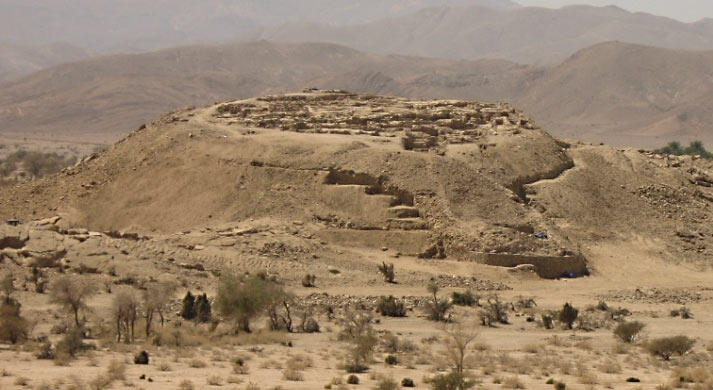
1. Salut archaeological site, Oman.
 
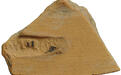
2. Seal impressed fragment, likely belonging to an Harappan ledge shouldered jar, the impression showing two confronting bulls and some Harappan script (l 3.6 cm, w. 5.5 cm, th. 0.7 cm).
 
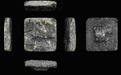
3. This stone square stamp seal is probably the best example of an Indus-inspired seal found so far in Oman.
 
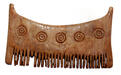
4. Among the luxury imported objects discovered in Ras al-Jinz, along the Omani coast, there is this beautiful comb made of elephant ivory. As well as pots, beads and a copper stamp seal, the comb comes from Harappa, one of the main sites of the Indus civilization.
 
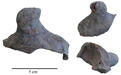
5. Fragment, from Salut, can be identified as a hollow clay “toy” in the shape of a bird: this kind of artifact is well known from Harappan sites (l. 8.5 cm, w. 7 cm, h. 5.5 cm).
Excavations

The researches are available here.

Thursday, 23 June 2016

Exploring Indus crop processing: combining phytolith and macrobotanical analyses to consider the organisation of agriculture in northwest India c. 3200–1500 BC


Jennifer Bates1 • Ravindra Nath Singh2 • Cameron A. Petrie1

Abstract

This paper presents a preliminary study combining
macrobotanical and phytolith analyses to explore
crop processing at archaeological sites in Haryana and
Rajasthan, northwest India. Current understanding of the
agricultural strategies in use by populations associated with
South Asia’s Indus Civilisation (3200–1900 BC) has been
derived from a small number of systematic macrobotanical
studies focusing on a small number of sites, with little use
of multi-proxy analysis. In this study both phytolith and
macrobotanical analyses are used to explore the organisation
of crop processing at five small Indus settlements with
a view to understanding the impact of urban development
and decline on village agriculture. The differing preservation
potential of the two proxies has allowed for greater
insights into the different stages of processing represented
at these sites: with macrobotanical remains allowing for
more species-level specific analysis, though due to poor
chaff presentation the early stages of processing were
missed; however these early stages of processing were
evident in the less highly resolved but better preserved
phytolith remains. The combined analyses suggests that
crop processing aims and organisation differed according 
to the season of cereal growth, contrary to current models
of Indus Civilisation labour organisation that suggest
change over time. The study shows that the agricultural
strategies of these frequently overlooked smaller sites
question the simplistic models that have traditionally been
assumed for the time period, and that both multi-proxy
analysis and rural settlements are deserving of further
exploration.
Keywords Indus Civilisation  Crop processing
Phytoliths  Plant macro-remains  South Asia  Bronze Age

Yog.

See also :
Oxygen isotope in archaeological bioapatites from India: Implications to climate change and decline of Bronze Age Harappan civilization