Search This Blog

Showing posts with label Society. Show all posts

Thursday, 7 December 2017

Indus Administrative Technologies. New data and novel interpretations on the Indus stamp seals and their impressions on clay

Another fantastic research from Dennys Frenez . The presentation is quite beautiful, waiting eagerly for the proper paper .

Indus Administrative Technologies. New data and novel interpretations on the Indus stamp seals and their impressions on clay
This presentation summarizes the results of different studies that I conducted over the past ten years on Indus Civilization stamp seals and their impressions on clay (46th Annual Conference on South Asia, University of Wisconsin-Madison, 26–29 October 2017)

From the presentation :

 Clay sealing technology in the Indus Civilization
Same administrative sealing procedure reconstructed for the Middle East:
Clay sealings used to control and record the access to specific rooms and containers and to the goods they contained
Clay sealings used in the internal administration of the sites and not for securing the integrity of shipped packages
Clay sealings were used to control main types of containers used in the Middle East
Structures and closing devices unique of the Indus Civilization sites
About one/third of the clay sealings have been stamped with more than one seal
(sharing of ownership,storage space or administrative duties?)
Storage and administrative technologies and procedures were adapted to the socioeconomic organization of the different sites or part of the sites
Considering the lower occurrence of clay sealings at Indus sites respect to sites in the Middle East and the use of a different storage technology I think they were not equally used for the daily redistribution of food rations but to control goods and raw materials of pivotal socioeconomic and ideological importance in the Indus society

Yog .

Saturday, 29 July 2017

Aryan Migration – From Academics to Politics: An Unfortunate Journey

Krishnendu Das
(Research Scholar, Department of Archaeology, University of Calcutta) 


In his 1947 article “Harappa 1946 : The Defences and Cemetery R -37” British archaeologist Robert Eric Mortimer Wheeler declared that “ The Aryan invasion of the Land of Seven Rivers, the Punjab and its environs, constantly assumes the form of an onslaught upon the walled cities of the aborigines
….On circumstantial evidence, Indra stands accused''. 1 And it was for the first time a linguistic theory found its backbone in archaeology. The theory of a common ancestor of the north Indian languages and the languages spoken in Europe was taking its shape when in the 18 th century Sir William Jones discovered striking similarities between Sanskrit and the European languages. This simple observation gave birth to a theory that some Aryan speaking people invaded the Indian subcontinent around 1500 BC and demolished the Harappan  people and its civilization. But archaeological evidence was still wanting until Sir Robert issued his aforementioned fatwa.
He found a scatter of some 37 unburied skeletons from Mohenjodaro which led him to speculate a slaughter by the Aryan god Indra. In no time, the theory found wide acceptance in the scholarly world. But the situation took a new turn when archaeologist G.F. Dales of the University of Pennsylvania published his ground-breaking findings titled The Mythical  Massacre at Mohenjo-daro in Expedition magazine in 1964
.
Dales, who would later become one of the co-directors of Harappa Archaeological Research Project, showed that these skeletons belong to different stratigraphical levels and were not recovered from the uppermost level of the site. This evidence goes against the Aryan invasion theory because if there were any kind of massacre by some intruders they should have belonged to the uppermost level or the final phase of Mohenjodaro, which was definitely not the case. Moreover some of the skeletons  bore cut-marks which had been healed and it amply proved that the injuries had got nothing to do with their death. And except Mohenjodaro, no such evidence was found from any other site of the Harappan civilization which would establish Sir Robert’s arguments

When the Aryan invasion theory lost its validity, the Aryan migration theory gradually started taking its place. A group of scholars still assume that after the decline of the great Harappan civilization, a group of Indo-Aryan speaking people migrated from central Asia and entered the Indian subcontinent in several waves.2 3 4 The theory says that these Indo-Aryan people pushed Dravidian speaking Harappans towards south India. And the entire north, west and eastern spans of the Indian peninsula were gradually Aryanised within a few centuries. This age-old theory was also based solely on the linguistic assumptions and not properly evidenced by the archaeological parameters. Just like the Aryan invasion theory, the Aryan migration theory also faced stiff challenges since its inception by scholars from as diverse fields as archaeology, anthropology, geology, genetics, linguistics and so on. Recent studies in the above mentioned fields have decidedly showed the utter inharmonious nature of this theory. But the biased minds seem not to care about that. To make things worse, the battle between the invasionist/migrationist and the non-invasionist/migrationist scholars gradually took a shape and form of a  political duel. While Marxist scholars started vouching for the migration theory, the scholars belonging to the nationalist school are upholding an altogether antithetical theory. And a sheer academic debate lost its identity and dignity in the noose of different political agendas. We know that only archaeological evidence can securely unfurl the petals of the remote pasts. Because archaeology gives out the ground reality of the ancient ages from the core of the ground. That is why our history should be written according to the archaeological findings. But in the case of the Aryan migration theory, the whole process that followed was just set upside down. After the proposition of the theory, some illustrious scholars attempted to fit the new archaeological findings in consonants to the Aryan migration theory. To be true, there is nothing in Indian archaeology around 1500BC time period that displays the evidence of any kind of mass migration or several waves of population movement towards South Asia from outside. It was the time when the Harappan civilization was tilting towards its de-urbanised phase. The population movement, which is archaeologically attested during this time period, was from the north-west Indian Harappan territory to the inner India. If the Harappans were Dravidian-speaking people and they were pushed to the modern day south Indian region by the intruding Aryans, one should expect some late Harappan sites in the said region. But the archaeological reality says otherwise as there is no Harappan site beyond Daimabad, which is a late Harappan site of Maharashtra. And this archaeo-reality flings the migrationist scholars to a point of absolute uncertainty.

However, the argument is not enough to combat the enthusiasm of the migrationists. They stick to some old arguments and perhaps intentionally try to give the whole issue a political overtone.
I used the word “intentionally”, because the recent archaeological findings point towards a continuous development and transformation of the Indian civilization and not any kind of invasion/migration. But there is a more specific reason for using this term that warrants some elaboration. It is widely accepted in the scholarly world that the use of the horse was not known to the Harappans and that the horse was introduced in the Indian subcontinent by the invading/migrating Aryan folks. In their 2000 book The  Deciphered Indus Script , Natawar Jha and N. S. Rajaram claimed that they had discovered a lone broken seal with the depiction of a horse from the plethora of the Harappan seals and sealings. But after a close scrutiny it is translucently clear that it was the computer of the claimants which pieced a horse head together with a hind part of a Harappan seal animal. This incident offered a golden opportunity to the migrationist scholars to portray every horse evidence from the Harappan sites as a mere assiduous nationalist or Hindutva endeavour. But in reality, true horse bones were recovered from several Harappan sites belonging to the mature Harappan levels which were securely dated between 2700 BC to the 2000 BC and which had nothing to do with the so called migrations of some fictitious Aryan tribes. Every evidence of horse that was unearthed from a Harappan site dated  before 2000 BC was doubted and the competency of the scholars who identified them were also questioned. A significant incident can be cited in this connection. In a 1974 article 5, A.K. Sharma, an expert in faunal studies, identified the remains of true domesticated horse from the mature Harappan level of Surkotada, a  prominent Harappan site of Gujarat. But Sharma’s claim lacked widespread acceptance as migrationist scholars stamped the specimens as onager or wild ass. After some 20 years, a renowned archaeologist and horse specialist of Hungarian origin, Sandor Bökönyi, came to India and confirmed Sharma’s identification after examining the said specimens.6 The aggrieved Sharma then reacted: “This was the saddest day for me as the thought flashed in my mind that my findings had to wait two decades for recognition, until a man from another continent came, examined the material and declared that ‘Sharma was right’. When will we imbibe intellectual courage not to look across borders for approval? The historians are still worse, they feel it is an attempt on the part of the ‘rightists’ to  prove that the Aryans did not come to India from outside her boundaries.”7

 However, the unrelenting controversy does not end here. Richard Meadow of Harvard University and Ajita Patel were still in very much doubt about the identification, though they failed to convince the Hungarian master Bökönyi.8And for historians and archaeologists in our subcontinent, crying a political conspiracy is perhaps the easiest thing to do when the fault lines of one’s theory get exposed. Even Amartya Sen argued in The Argumentative Indian  citing the example of the attempt of Jha and Rajaram that if a textbook of history displayed the evidence of horse in the Harappan civilization, then it was nothing but a  process of saffronisation. However, one may perhaps expect a scholar of Sen’s stature to be more focused in academic discussions, rather than taking political sides. In reality, scholars having different political inclinations try to interpret a fact in a way that suits their respective political agendas. That’s why migrationist scholars refuse to understand a simple archaeological fact that horse evidences were also very meagre up to the early historical times as in the Harappan civilization sites. And if the remains of the horse had anything to do with the so called Aryan migration, it should have increased immediately after the said incident which is not the case. The other arguments about the Aryan migration were also treated somewhat in an identical manner. Here what is really regrettable is that a purely academic debate was pulled down to a dirty game of politics. We should be more open-minded to accept the archaeological evidences, in whatever form they  present themselves before us. Even today, we don’t know for sure the true nature of the language that was used by the Harappans. It may be the so called Indo-Aryan or Dravidian or an altogether different one, but we have to find the solution in a purely unbiased academic way and not with any kind of preconceived notion. The need of the hour is to safeguard academics from the vicious political interest which tends to take unfair advantage of it and attempt to provoke people in one way or the other. Recent archaeological and anthropological studies point towards a conclusion that there was no incident of any kind of mass migration or a continuous wave of migrations into the Indian subcontinent during the time  period of 2000 to 1500 BC. But we should remember that this theory does not establish the claim of a group of people to be more Indian because of their indigenousness. The criteria of being Indian have been clearly laid down in its constitution. Anyone fulfilling those criteria are Indian and enjoy the rights  provided by it. Our history has no doubt shaped our present, but our present should not be coloured by what happened in the remote past. That is a pure academic concern. Let academics speak for itself.

Yog.
.

Monday, 26 June 2017

CEREALS AS SOURCE OF FOOD IN RIGVEDA

 А.А. Семененко
 Gymnasium No 2, Voronezh, Russia
Abstract: The article deals with all descriptions of cereals as  food in Rigveda. The author demonstrates that references to cereals as food already in the most archaic cycles of the Samhita point to  sedentary and agricultural (grain growing) economy of Rigvedic  society from the very beginning of its development.  Key words: Rigveda, Indo-Aryans, cereals, food. 

We get the earliest textual evidence of Indo-Aryans (further IA) from the Rigveda Samhita (further RV) [1] composed at least several   hundred years before 2600 BC [2]. RV includes four chronological layers: 1. Family Books II– VII, the most archaic core of the collection + the IXth Mandala (or cycle)— which is most probably a result of the extraction of all the Soma hymns from the Family Books; 2. the VIIIth Mandala or Book of song-like hymns added to the emerging Samhita (cycles II– VII + IX); 3. the Ist Mandala or Introduction and 4. the most modern Xth part or the Conclusion [3]. It is crucial for the establishing of the economy type of the RV-edic IA (whether  predominantly nomadic cattle-breeding or sedentary and complex cattle-breeding and agricultural) to know the source of nutrition of the authors of the Samhita in each of the four periods of RV creating.

Already during the process of composing hymns of the most ancient Family Mandalas of RV grain was used to feed drawing animals (úpo nayasva vŕ  ̥ṣaṇā | grásetām áśvā ví mucehá śóṇā divé-dive sadŕ  ̥śīr addhi dhānā ́ḥ (III.35.3), kr  ̥tā ́ dhānā ́ áttave te háribhyām (III.35.7)). It was also consumed by people as food (dhānā ́vad juṣāṇáḥ (III.43.4), yéna tokā ́ya tánayāya dhāníyam bī  ́ jaṃ váhadhve (V.53.13), sánti dhānā ́ḥ (VI.29.4)). It could be fried (bhr  ̥ jjā ́ti dhānā ́ḥ) (IV.24.7),boiled as gruel (karambhíṇam) or baked as (a small loaf of) bread(apūpávantam) or as a cake (puroḷā ́śam) (dhānā ́vantaṃ karambhíṇam apūpávantam juṣasva (III.52.1), dhānā ́ḥ puroḷā ́śam kr  ̥ṣvehá cā ́rum (III.52.5), dhānā ́ḥ puroḷā ́śam ā ́hutam māmahasva naḥ (III.52.6), te cakr  ̥mā karambháṃ dhānā ́ḥ apūpám addhi (III.52.7), práti dhānā ́  bharata tū ́yam asmai puroḷā ́śaṃ (III.52.8)).

To some extent more modern Mandala the VIIIth contains pleas to grant grain (tuváṃ na indra āsãṃ háste dāváne dhānā ́nãṃ ná sáṃ gr  ̥ bhāya asmayúr) (VIII.70.12) and mentions corn, gruel and (a small loaf of) bread as food (dhānā ́vantaṃ karambhíṇam apūpávantam) (VIII.91.2).

Much later Mandala the Ist makes it clear that fried grain was served with melted butter (imā ́ dhānā ́ ghr  ̥tasnúvo) (I.16.2). The most modern Mandala the Xth tells us about eating corn (jakṣīyā d dhānā ́) (X.28.1) and describes the sowing of seeds and growing of grain (vápanto bī  jam iva dhāniyākŕ  ̥taḥ) (X.94.13).

References to gruel (karambhá) can be found in all chronological layers of the RV (I.187.10; III.52.1, 7; VI.56.1; VI.57.2; VIII.91.2), as well as the to the melted butter-soaked (apūpáṃ ghr  ̥távantam) (X.45.9) (loaf of) bread (apūpá) (III.52.1, 7; VIII.91.2), baked (puroḷā ́ pacatás (III.28.2), puroḷā ́śam pacatíyaṃ (III.52.2)) cake (puroḷā ́(śa))(I.162.3; III.28.1, 3, 4, 5, 6; III.41.3; III.52.3, 4, 5, 6, 8; IV.24.5; IV.32.16; VI.23.7; VII.18.6; VIII.2.11; VIII.31.2; VIII.78.1) and  barley mixed with milk and Soma (soma gávāśiro yávāśiro (I.187.9), yávāśiraṃ sómam (II.22.1), gávāśiraṃ yávāśiraṃ sutám (III.42.7), índor yávāśiraḥ (VIII.92.4)).

Notably grain as food and food made of grain appear mostly in the Family cycles of RV, much less so — in the later Mandala the VIIIth and they almost disappear in the latest (I and X) parts of the Samhita. This textual fact totally disproves the widely spread (Aryan Invasion/Immigration Theory rooted) pseudoacademic concept of RV-edic IA being nomads in the earliest period of RV composition. All  points to the conclusion that grain growing was crucial to RV-edic economy from the most archaic phase of its recorded existence.

Yog (Page 254).

See also :
ARABLE FARMING OF VEDIC INDO-ARYANS ACCORDING TO ATHARVAVEDA SHAUNAKIYA AND SAMHITAS’ DATING

Saturday, 1 October 2016

Begotten of Corruption? Bioarchaeology and “othering ”of leprosy in South Asia

Gwen Robbins Schug

Associate professor of anthropology, Appalachian State University, Boone, NC, USA

ABSTRACT
Leprosy is strongly stigmatized in South Asia, being regarded as a manifestation of extreme levels of spiritual pollu-tion going back through one or more incarnations of the self. Stigma has significant social consequences, including sur-veillance, exclusion, discipline, control, and punishment; biologically speaking, internalized stigma also compounds the disfigurement and disability resulting from this disease. Stigma results from an othering process whereby difference is recognized, meaning is constituted, and eventually, sufferers may be negatively signified and marked for exclusion. This paper traces the history of leprosys stigmatization in South Asia, using archaeology and an exegesis of  Vedic texts to ex-amine the meaning of this disease from its apparent zero-point — when it first appears but before it was differentiated and signified — in the mature Indus Age. Results suggest that early in the second millennium BCE, leprosy was perceived as treatable and efforts were apparently made to mitigate its impact on the journey to the after world. Ignominy to the point of exclusion does not emerge until the first millennium BCE. This paper uses archaeology to create an effective history of stigma for leprosy, destabilizing what is true about this disease and its sufferers in South Asia today.
Yog.

See also :
The Center Cannot Hold: A Bioarchaeological Perspective on Environmental Crisis in the Second Millennium BCE , South Asia

Monday, 29 August 2016

Depression, Anxiety, Stress and Spirituality in Yoga Practitioners

Nandeesh Y. D1 *, Deepa Kulkarni 2, Shanmukh V. Kamble 3

ABSTRACT
The aim of the present study was to focus on the relationship of Spirituality with Depression,Anxiety and Stress of Yoga practitioners. The sample of 40 male and 40 female yoga practitioners from Hubli-Dharwad constituted the sample for study. The DASS and FACIT Spirituality scales were administered. The results revealed a Significant relationship existing between Spirituality and Depression (r=-.54; P<.01), Spirituality and Anxiety ( r=-.28; P<.01) Spirituality and Stress ( r=-57;P<.01). Further Regression analysis revealed the significant contribution of factors like reading journal monthly, marital status and income to Anxiety, journal reading, Marital status, visiting websites of Yoga and income significantly contributed to Depression and finally reading journal, income contributed to Stress of Male and Female Yoga practitioner. The social implications of findings are discussed.
Yog.

Thursday, 30 June 2016

Agriculture In India: Traversing Through Ancient Indian Literature

Dr. Ajesh TV
Agriculture is a system of life in which humans, plants and animals are interwoven. It has been playing a major role in the economy of India since the pre-Neolithic times. It was considered as an honourable profession and man took this as the principal means of livelihood. The earliest evidence as regards to agriculture comes from Mehrgarh (8000 BCE onward) in the North West and from sites in the Deccan, central India, Kashmir and the northwest [1]. ‘The process of domestication of plants and cereals would have taken a long time. Evidences of cereals can be traced at Mehrgarh and in the Vindhyas in 6,000 BCE. Wild varieties of rice have been found in the Vindhyan region in a Mesolithic context at Chopanimando in Meja Tehsil of Allahabad.’ [2] In later times, the excavations at Harappa and Mohenjo-Daro proved that there did exit a good system of agriculture [3]. The fabric of Indus agriculture rested undoubtedly on plough cultivation [4] The discovery of the furrows of a ‘ploughed field’ at Kalibangan and the plough explains the really large extend of Indus agriculture, covering the North-West plains and extending into Gujarat [5]. The granaries at Harappa and Mohenjo-Daro, the stack of storage jars at Kalibangan etc. suggest that the people were producing surplus [6] grains [7]. From the early historical period onward, texts and inscriptions in Sanskrit, Pāli, Prakrit and Tamil literature provide occasional descriptions of agricultural practices. Probably all castes and communities of Indian society, rich and poor, male and female were engaged in agricultural activities. They were commonly known as farmers and do not constitute a homogeneous group.
The Vedic literature gives plentiful evidence to agriculture. In Ṛgveda [8] there is abundance of data with regard to agriculture. Agriculture was the significant characteristic of the Ārya community and it was counted as a distinguishing mark of the ‘civilized’ from the ‘barbarians’. It was not confined to the lowest strata of population, but had been the occupation of a class of men who were held an important position in the society [9] According to Ṛgveda, cultivated fields are called kṣētra [10] and fertile ones urvara [11] which might indicate alluvial lands as well. Another term used in connection with agriculture is sītā. The term kṛṣṭi in Ṛgveda which denotes people in general, appear to imply that they were by and large agriculturists [12]. It refers to the preservation of seeds which indicates that agriculture was a regular occupation from year to year (5.53.13). ............

Yog.

Thursday, 23 June 2016

Exploring Indus crop processing: combining phytolith and macrobotanical analyses to consider the organisation of agriculture in northwest India c. 3200–1500 BC


Jennifer Bates1 • Ravindra Nath Singh2 • Cameron A. Petrie1

Abstract

This paper presents a preliminary study combining
macrobotanical and phytolith analyses to explore
crop processing at archaeological sites in Haryana and
Rajasthan, northwest India. Current understanding of the
agricultural strategies in use by populations associated with
South Asia’s Indus Civilisation (3200–1900 BC) has been
derived from a small number of systematic macrobotanical
studies focusing on a small number of sites, with little use
of multi-proxy analysis. In this study both phytolith and
macrobotanical analyses are used to explore the organisation
of crop processing at five small Indus settlements with
a view to understanding the impact of urban development
and decline on village agriculture. The differing preservation
potential of the two proxies has allowed for greater
insights into the different stages of processing represented
at these sites: with macrobotanical remains allowing for
more species-level specific analysis, though due to poor
chaff presentation the early stages of processing were
missed; however these early stages of processing were
evident in the less highly resolved but better preserved
phytolith remains. The combined analyses suggests that
crop processing aims and organisation differed according 
to the season of cereal growth, contrary to current models
of Indus Civilisation labour organisation that suggest
change over time. The study shows that the agricultural
strategies of these frequently overlooked smaller sites
question the simplistic models that have traditionally been
assumed for the time period, and that both multi-proxy
analysis and rural settlements are deserving of further
exploration.
Keywords Indus Civilisation  Crop processing
Phytoliths  Plant macro-remains  South Asia  Bronze Age

Yog.

See also :
Oxygen isotope in archaeological bioapatites from India: Implications to climate change and decline of Bronze Age Harappan civilization

Friday, 27 May 2016

Buddhist Influence on Ka'ba

There are many theories regarding the original cultural background of Muhammad . Recently, I read this  post . Though, I don't support his ideas on Indian History, he makes some good posts in his website. But my aim in this post, is not to focus on Muhammad but on the Ka'ba , the holiest place in Islam. Now, coming to the point , I was reading the book Buddhism in Iran: An Anthropological Approach to Traces and Influences by Mostafa Vaziri. I have to say, that the book is a gem , it unearths many of the Buddhist traits hidden in the cultural sphere of Iran and neighboring nations!. But much to my surprise, in Chapter 6 of the book ,titled  Nawbaha¯r and Stu¯pa-
Like Islamic Shrines from p.94 to p.95, we read :


Various accounts also claim that the paintings on the walls of the Ka‘ba portraying the prophets included Abraham with the portrait of his son, Ismā‘il, facing him on a horse, as well as the portrait of Jesus with his mother Mary; apparently they were well preserved until the Ka‘ba was destroyed in a civil war. 27 Other celestial (or holy) characters were said to have been depicted in the Ka‘ba’s artwork. 28 It seems far-fetched that the pre-Islamic paintings of the Ka‘ba, a shrine whose patrons before the Prophet of Islam were neither Christian nor Jewish, would have contained paintings of biblical characters. The nature of these paintings may have been the remainder of pre-Islamic Hindu-Buddhist art work, if any. The task of giving Islamic identities to these un-tagged or “unknown” paintings and portraits in the Ka‘ba was presumably the work of the Muslim authors. It can be only speculated that the paintings were still preserved after the Ka‘ba was Islamized because the pictorial prohibition in Islam seemed to be imposed based on hadīth transmission only much later.
Further indication to the potential presence of the Buddhists in Arabia is that the thirteenth-century Rashīd al-Dīn Faḍlallāh, in his Jāmi’ al-Tawārīkh, asserts that in pre-Islamic times, the inhabitants of Mecca and Medina and certain Arabs and Persians were adherents of the Buddha Shakyamunī and that statues of the Buddha were kept in the Ka‘ba. 29 This assertion by Rashīd al-Dīn may possibly corroborate with a miniature of the thirteenth century showing the Prophet at Ka‘ba destroying two statues seemingly to be the seated Buddha in a meditational position and one statue of Hanuman (a Hindu deity with the head of a monkey). 30 Other characteristics of the pre-Islamic Arabs that Shahrastānī describes may further corroborate with the Indian beliefs. It is said that before the advent of Islam, the Arabs believed in reincarnation and had rejected the concepts of revelation and prophecy, 31 all of which also correspond with the Buddhist belief.
Moreover, Mas‘udī in his discussion of the Buddha (Budāsef) refers to the Buddha’s followers as communities of idol worshippers whose temples included the Ka‘ba ( bayt al-harām ). 32 He also describes the Quraysh tribe of Mecca as having two gold-plated deer statues, one to be placed at the entrance of the Ka‘ba andthe other to be kept inside. 33 During the flood in Mecca that destroyed the Ka‘ba, one of these golden deer went missing, and the Quraysh tribe therefore decided to remove the other deer. 34 The deer, as discussed in the previous chapter, is a typically Buddhist symbol. In a significant parallel, the statues of two golden deer on either side of the iconic Wheel of Dharma are placed at the entrance gates of Buddhist vihāras to this day.

How could Buddhism have reached Mecca? The sea journeys of Indians to
Yemen, Arabia, and Egypt are somewhat documented. In pre-Islamic times, Mecca was a tolerant polytheistic society as well as a trade center, lying near the Red Sea via the Spice Route and attracting traders and missionaries of different backgrounds via land and sea. The Meccan sanctuary was not only a place for an annual pilgrimage in pre-Islamic times, where no bloodshed was permitted, but was also a place wheremerchants from different lands, including India, would hold a common market fairfor the pilgrims. 35 According to another Islamic tradition, the Brahmans of India traveled to Mecca for worship and paying homage to the idols in pre-Islamic times. 36
Nāsir Khosrau of the eleventh century refers to seeing Indians of Yemen with their particular type of hair dress, beard, and cloth ( lungī ) wrapped around their waist come to Mecca. 37 We can only presume that these Indians who continued coming to Mecca for trade, interestingly, without prohibition may have been a mixture of Hindus and Buddhists, but in medieval times both communities were casually known as Hindus (referring to Indians). Other historical references do point to the link between India and Arabia. The Indian settlements in Arabia, Yemen, Babylonia, and Egypt during the peak of commercial trade are recognized in historical writings. 38 Indians are even believed to have settled in Mecca and Medina, explaining the presence of several Sanskrit words and names of Indian spices in the
Arabic language (e.g., ‘ambar ,mushk ,zenjabil, and kāfur ).39

Given these indications and assertions by certain chroniclers, we can only guess that the Ka‘ba may have possibly been another Buddhist vihāra before Islam. Consider the acts required of Muslim pilgrims on hajj even today that include, in contrast to the Buddhist, anticlockwise circumambulation ( tawāf ) of the Ka‘ba and prostration. In addition, hajj pilgrims are required to shave their head and wear monastic robes (sleeveless and unsewn clothes) and must forbear wearing closed-toe shoes, cutting branches of trees, killing prey, and having sexual intercourse. These injunctions strongly match the rituals of the Buddhist monastic tradition. 40 Yet in the Muslim tradition, these norms are described as temporary states of purity that are performed in the Ka‘ba by the pilgrims and are considered as a substitute for the purity of the Garden of Eden, and circumambulating is explained as being associated with Adam’s sin. 41 Despite these explanations on behalf of Islamic tradition, their similarity to Buddhist rituals is rather remarkable.However,it seems no historical memory remains of Buddhist connections with relation to Mecca.

I believe this was right under our nose . The Idea that Ka'ba is a Shiva Temple, is of course lunatic, propagated by Hindu Nationalist buffoons .But it seems, that there is,an indirect relation with Indic and Buddhist influences.We perhaps can also put the presence of Z-93 in Arabia into this context!.

Also Buddhist presence on the south coast of Arabia (Yemen, Socotra island), is not excluded, a friend of mine , met once a French archaeologist there, who told of ''ruins apparently of a Buddhist vihara with stupas in Yemen''. Also recently, there were Indian temples in Aden , also see here .We do know that, even  from the times of SSVC , there were robust trade relations with those parts of the world.

Monday, 4 January 2016

Tibet's spiritual leader speaks on love, compassion, tolerance, forgiveness


Sunday, 03 January 2016 22:44 Jane Cook, Tibet Post International

Tibet-India-2015-808
His Holiness the Dalai Lama at the Tashi Lhunpo in Bylakuppe , Karnataka, India on December 22,2015 .
Photo : TPI/Yeshe Choesang
         
Bengaluru — In reply to a question about whether it is possible to preserve religious values without religion, the spiritual leader of Tibet suggested that in a world of 7 billion people, where 1 billion express no interest in religion, there has to be a way of exchanging the understanding of love, compassion, tolerance and forgiveness.

His Holiness addressed a meeting of the Indian Administrative Service (IAS) Association (Karnataka) in Bengaluru, Karnataka, India on January 2, 2016.. "Brothers and sisters," he greeted them. "I'm very happy to be able to meet with you today. "

"We are all part of humanity, 7 billion of us who are fundamentally the same. Of course, there are differences among us of faith, colour of skin and colour of hair, some of us come from different countries and speak different languages, but these are secondary differences." His Holiness said.

"The primary thing is that we are essentially the same. Many of the problems we face, we make for ourselves, based on our mistaken emphasis on these secondary differences between us," he said, adding: "Seeing each other in terms of 'us' and 'them' and being motivated by a strong sense of self-centredness are the source of violence, killing and corruption in our world."

"Instead we have to make an effort to promote a sense of the oneness of all human beings. We have to think about the welfare of the whole of humanity. If humanity is happy, as individuals we'll all be happy. If humanity is wracked with fear and suspicion, we'll be unhappy."

Comparing ancient Egyptian, Chinese and Indian civilizations, His Holiness suggested that the Indus Valley culture had given rise to by far the greatest number of thinkers and teachers, such as the Buddha. He said that as members of the IAS, his listeners were in a position to help promote and preserve ancient Indian values. He said he didn't mean performing pujas and rituals so much as values like ahimsa and the science of the mind.

"Knowledge of the mind, emotions and their workings is something that can be studied on an academic level. It's on that basis that I have engaged in discussions with modern scientists over the last 30 years. The benefits have been mutual. I've learned, for example, that traditional Buddhist cosmology, depicting a flat earth with Mt Meru at its centre, is mistaken.

"On the other hand, the quantum physics assertion that nothing has objective existence seems to correspond with the Madhyamaka view that, since all things depend on causes and conditions, they only exist as designations."

His Holiness told his audience that having lived the last 56 years, the best part of his life, in this country, thoroughly educated by ancient Indian thought, he feels like a son of India. Wherever he travels in the world he shares the ancient Indian ideas of ahimsa and inter-religious harmony.

"Be honest, transparent and truthful; that way you'll establish trust," His Holiness said when asked for his advice to Indian civil servants.

To a question about whether it is possible to preserve religious values without religion he said this is what he calls secular ethics. He conceded that some friends are wary of the word secular, but he interprets it to mean respect for all religious traditions and even the views of those who have no faith. He suggested that in a world of 7 billion people, where 1 billion express no interest in religion, there has to be a way of exchanging the understanding of love, compassion, tolerance and forgiveness.

That way is to cultivate secular ethics. His Holiness mentioned ongoing projects in North America, Europe and India to formulate a curriculum to incorporate secular ethics into the modern education system. He also noted the effectiveness of nearly a dozen US cities declaring themselves 'cities of kindness'.

A final questioner wanted to what had happened when the Buddha achieved enlightenment under the Bodhi Tree. First His Holiness drew attention to the more than 300 volumes of scripture translated from Sanskrit into Tibetan that can be seen as answering this. Then he mentioned Buddha nature that refers to the fundamental mind, a mind that is naturally pure, that is free from anger, attachment and ignorance. Since these defilements or disturbing emotions are not a part of that mind, they can be eliminated. When that occurs, the Buddha's mind is revealed.

Sunday, 28 June 2015

Human Skeletal Remains from Ancient Burial Sites in India: With Special Reference to Harappan Civilization


Astha Dibyopama,1 Yong Jun Kim,1 Chang Seok Oh,2 Dong Hoon Shin,2 and Vasant Shinde1
1Department of Archaeology, Deccan College Post Graduate and Research Institute, India.
2Department of Anatomy, Institute of Forensic Science, Seoul National University, Korea. Correspondence to: Vasant Shinde. (Deccan College, Post-Graduate & Research Institute (Deemed University)
Abstract

Harappan Civilization is well known for highly sophisticated urban society, having been flourished in extensive regions of northwestern part of Pakistan and northeastern part of Afghanistan as its heyday around 4500 years ago. Most archaeologists agree on the periodization of this civilization as three different phases (Early, Mature and Late), which represent its cultural process of origin, development and decline. From the Harappan sites, one can note that there were about more than fifty burial sites discovered so far related with the civilization. In this article, we are trying to introduce the brief picture of the Harappan burials from the archaeological as well as anthropological perspectives.
Debates on Harappan People
From the perspective of anthropology, nothing is more important than studies on who were the inhabitants of Harappan civilization. Therefore, concerning biological affinities of the Indus valley inhabitants during Harappan period , we must note that there have been very hot debates among the related archaeologists and anthropologists. By anthropological researches over skeletal remains, some researchers claimed that two to four races might have been co-present in Harappan society. Any variation from these idealized types of races was explained as the result of admixture between pure races.  
However, we could not make an easy conclusion on this hypothesis because researchers like Brian Hemphil and J. R. Lukacs thought differently. By research on cranial features of the skeletons from Harappan burial sites, they tried to assess the biological continuity or discontinuity among the peoples in regions. About the subject, they can give following speculation: early chalcolithic inhabitants of Mehrgarh and late Harappan inhabitants of Cemetery H in Harappa share close biological affinity. In fact, they could not deny the long period of in situ continuity of Harappan peoples' biological traits .
Although we agree the viewpoint of Hemphil and Lukacs in general, it could not be easily denied that the biological continuity also coupled with the occasional pulses of genetic input from outside either. We speculate that the genetic input might have been conditioned by frequent trade of India, which could be further cemented by marriage alliances between the peoples in different areas. The first genetic exchange must have occurred from Neolithic period, between the Indus valley and the Iranian Plateau. During the 1st millennium B.C., the secondary genetic exchange based on seaborne trade could be identified. The trade routes appear to have shifted to a gradual introduction of new genes into the Indus valley and then neighboring lands . In fact, the origin and continuity of ancient Indian people has been the one of the main subjects anthropologists worldwide have discussed about; and it will remain as such, for the time being in the future.
 Burials in different Harappan sites. (A) and (B) Burials at Mehrgarh site. (A) Burial in clay box (B) Mehrgarh burials, pit with side chamber closed up with mud bricks. (C) and (D) Burials found at Kalibangan site. (C) Pot Burial without Skeleton. (D) Kalibangan brick-lined grave. (E) A burial at Lothal site. A double burial inside brick lined grave.
Conclusion

In this article, we attempted to project brief picture of burial tradition followed by the health and diet of the people of Harappan civilization. In fact, excavated Harappan burials are scanty in India and not much in-depth scientific research has been carried out on them, comparing with the Harappan habitation site. But still the data available to us till date about the Harappan burial practices is quite helpful in reconstructing the different aspects of Harappan population, their life style, socio economic status etc.
We note that the evidence of human remains and burials of Harappan civilization provided substantial amount of information about the society. And forthcoming studies on human remains from Harappan sites will provide invaluable information on the health and disease status of the people from one of the oldest ancient civilizations around the world. In fact, considering that archaeological and anthropological information was always significant to each other, for getting the comprehensive knowledge about the ancient Harappan society, interdisciplinary collaboration between two research fields would be still necessary in the future.
Yog.


Sunday, 3 May 2015


Evidence for Patterns of Selective Urban Migration in the Greater Indus Valley (2600-1900 BC): A Lead and Strontium Isotope Mortuary Analysis


  •  Benjamin Valentine,George D. Kamenov,,
  • Jonathan Mark Kenoyer,,
  • Vasant Shinde,
  • ,Veena Mushrif-Tripathy,
  •  Erik Otarola-Castillo,
  • ,John Krigbaum

Abstract


Just as modern nation-states struggle to manage the cultural and economic impacts of migration, ancient civilizations dealt with similar external pressures and set policies to regulate people’s movements. In one of the earliest urban societies, the Indus Civilization, mechanisms linking city populations to hinterland groups remain enigmatic in the absence of written documents. However, isotopic data from human tooth enamel associated with Harappa Phase (2600-1900 BC) cemetery burials at Harappa (Pakistan) and Farmana (India) provide individual biogeochemical life histories of migration. Strontium and lead isotope ratios allow us to reinterpret the Indus tradition of cemetery inhumation as part of a specific and highly regulated institution of migration. Intra-individual isotopic shifts are consistent with immigration from resource-rich hinterlands during childhood. Furthermore, mortuary populations formed over hundreds of years and composed almost entirely of first-generation immigrants suggest that inhumation was the final step in a process linking certain urban Indus communities to diverse hinterland groups. Additional multi disciplinary analyses are warranted to confirm inferred patterns of Indus mobility, but the available isotopic data suggest that efforts to classify and regulate human movement in the ancient Indus region likely helped structure socioeconomic integration across an ethnically diverse landscape.
Fig 1.  Map of the Indus Civilization culture area with locations mentioned in the text.

From The Conclusion-
A consideration of the isotopic data and their bioarchaeological context allows certain inferences to be made about the proposed Indus institution. Isotopic [12] and osteological [13] distinctions between males and females at Harappa and the timing of migration at Farmana suggest certain hinterland individuals from distinct genetic populations took up residence with new corporate groups at a very young age. The inclusion of modest burial wealth may indicate they were treated with respect by local groups, whereas sex-based distinctions in provenience suggest migrants were selected according to the preferences of their natal groups rather than the whims of Indus urbanites. Thus the Indus institution of immigration was integrative, accommodating various ethnic or cultural groups within a standardized set of practices reserved exclusively for a class of first generation immigrant. Furthermore, the scarcity of cemetery inhumations and their potential association with resource-rich regions suggests the institution may have been limited in scope to the economic interests of specific mercantile groups rather than all segments of society. Ethnography from the nearby Hindu Kush Range suggests one possible analogy for the Indus institution. Asymmetric systems of fosterage employed by fractious historical kingdoms to build hierarchical political alliances [86] may be broadly comparable to Indus practices, such that fostered individuals literally embodied the relationships between urban and hinterland groups. Whether or not this particular model is borne out by additional multi-disciplinary analyses, however, our isotopic inferences of migration define key parameters in any future investigation of Indus Civilization inter regional interaction. 

Tuesday, 20 January 2015

Real pride of ancient Indian science by Sunita Narain

 Sunita Narain

I write this with considerable impatience and one question. Do we really have the time to waste on controversies like what ancient India did or did not achieve by way of scientific discoveries? This is when there is the huge unfinished agenda to use the best of to tackle current challenges and crises.

At the recently concluded annual ritual of the Indian Science Congress, the Union science and technology minister drew solace from the fact that ancient India had mathematical prowess - we gifted the Pythagoras theorem and algebra to the world. There is truth in this, no doubt. But all this is about the past. At best, it tells us to be proud of our legacy. But what does it tell us about what needs to be done to innovate for our needs?

There is no doubt that Indian science is losing ground; every indicator shows this. The ranking of our top scientific educational institutions is consistently falling and our achievements are fewer by the day. Most importantly, Indian scientists are nowhere to be seen in the world you and I inhabit. This is when our modern world requires science to be integrated into every aspect of daily life.

This is also the problem I have with the current controversy about Vedic science - whether we flew aircraft or mastered plastic surgery is immaterial for modern India. What matters is if ancient Indians understood the science and art of settlement planning, architecture and governance of natural resources. This is the history we need to learn because it tells us what we must do right. These are the real symbols of ancient India's scientific prowess.

Take water, for instance. Traditionally, we built highly sophisticated systems, which varied to suit different ecosystems, for harvesting every drop of water. Archaeological excavations near Allahabad have found evidence of early Indian hydraulic engineering. Dating back to the end of first century BC, the Sringaverapura tank is a remarkable system to take the floodwater of Ganga into a set of desilting chambers, including water weirs, to clean the water for drinking. It can be a matter of belief that Lord Ram drank water from this tank. But it is a fact that the technological system is so evolved that it would put to shame all public works engineers of today's India.

Dholavira, a settlement off the coast of Gujarat, dates back to the Indus Valley civilisation. Archaeologists have found this desert city had built lakes to collect run-off, bunds and inlet channels to divert water, and intricate drainage system for storm water, drinking water and waste. Today, we cannot even build city roads that do not get flooded each monsoon, or protect lakes for storing rainwater.

Till the time the British came to India, the water traditions were in vogue. British gazettes speak of these systems, at times with awe, calling us a hydraulic society. Sir William Willcocks, a British irrigation engineer, who was called in 1920 to advise the administration on how to handle famines, said the best answer was to go back to the ingenious system of flood management of Bengal. This was never done, of course.

Ancient Indians also understood the art of water governance. Kautilya's Arthasastra, written around 300 BC, has details of how tanks and canals are to be built and managed. The key was to clarify the enabling role of the state - the king - and the management role of local communities. The kings did not have armies of public works engineers; they provided fiscal incentives to communities and individuals who built water systems. The British changed all this, by vesting the resource with the state and creating large bureaucracies for management.

The British rulers also changed the tax system; collection of revenue became paramount, even during droughts. There was little then to invest in community assets. The decline came quickly and was cemented by polices of independent India. This is the history of resource management we need to learn.

But if we must be proud of our water heritage and relearn its art and science, then we must also reject its ills - the focus on rituals and the evils of the caste system. We are such a dirty nation today - look at the untreated sewage in our rivers and garbage in our streets - because we come from a society where waste is an "untouchable" business. As long as we can live with the idea of manual scavenging - somebody from a "lower" caste will carry our excreta away - we will never get a clean India.

If we must glorify the past, we must be proud of our present. This is what we need to learn. Quickly.

Thursday, 1 January 2015

Dalai Lama Sees Big Role For India Globally
PUNE: Tibetan spiritual leader Dalai Lama said the solution to 21st century's problems can be found through dialogue, talks, meetings and a spirit of reconciliation.

Speaking at a public function in Pune on Wednesday, Dalai Lama said that India, despite its problems, is a very stable country. "If its ancient knowledge is applied as an academic subject, combined with modern technology, Indians can make a major contribution to the world," he said.

Dalai Lama inaugurated Chanakya Mandal's new eight-storey educational-cum-residential building in Warje.

Addressing a packed auditorium, the Tibetan spiritual leader said that of the three ancient civilizations -- the Indus valley civilization, Chinese civilization and Egyptian civilization, the Indus valley civilization (the earliest known urban culture of the Indian subcontinent) has produced the most marvelous thinkers and philosophers. "India has a long history of over a thousand years. Concepts such as ahimsa, secularism and religious harmony have been known to India since ages. Modern India, as we see it now, has concepts such as free press, freedom of speech and expression. All these virtues have made India one of the most stable and reliable countries, despite its problems. Indians have great potential. If India's ancient knowledge is applied as an academic subject, combined with modern technology, Indians can make a significant contribution to the world," the Dalai Lama said.

He urged the generation below 30 years of age to shape and build the 21st century, making it a centre of peace. "Historians have said that over 200 million people have been killed in the 20th century alone due to violence. Thus, it is in the hands of the current generation to build a more stable 21st century. The only solution to all the problems of the century is through meaningful dialogue. So, the 21st century should be a centre of dialogue too. Functioning on the premise that real solution could only come through dialogue, talks and meetings is a way to make the century peaceful," said the 79-year-old spiritual mentor.

While speaking on the topic 'Secular Ethics', the Dalai Lama said that people need to feel a sense of oneness with all the seven billion people on this planet regardless of their religions or faiths, considering them as human beings first. "What is needed is oneness of the 7 billion people on the planet. All these 7 billion human beings have the same right to happiness and thus, it is absolutely wrong to harm or exploit another," he said.

On an audience member's question on terrorism, the Dalai Lama said that all major religions carry the message of love, tolerance, contentment and self-discipline. "The problem arises when people do not sincerely follow religion. All religions have the potential to curb destructive emotions. The actual meaning of the word 'Jihad' too means 'to combat our inner destructive emotions', and not bloodshed," he said.

Sunday, 27 October 2013

The Vedic Harappans, The Disaster of  Michael Witzel  and Some Flowing Traditions.....

On Aryans and Colonial Archaeology
Vedic Harappans
by Bhagwan Singh, Aditya Prakashan, F-14/65, Model Town II, New Delhi,1995
Jaspal Singh
South Asian History has been greatly distorted by the tendentious, colonial and eurocentric rendition of the development of the region. One of the most distorted areas of history has been the question of Aryans and the Indus Valley civilisation.
In this new work, Bhagwan Singh presents an important thesis on the origins of civilisation in South Asia. In the process, he also takes a hard look at the vast body of literature on the subject on this subject that has come down from colonialist scholars and their latter-day descendants.
Bhagwan Singh discusses the "Aryan" problem and settles this long-running debate with convincing arguments. As the title Vedic Harappans, itself suggests, Bhagwan Singh is not treading the old path. For him, the Vedic literature describes the Harappan reality. These are not two different or opposing tendencies. He states,
In short, if we discount the colonial legacy of docile self-denials and falling quickly in line with alien expectations, archaeology was at no stage at variance with the Aryan character of the Harappan civilization.
On the question of the Aryan invasion, he discusses in detail all the arguments put forward by the proponents of this theory. In a chapter titled The Myth Of Aryan Invasion, he points out that "there is neither any literary account of invasion of India by Aryans nor any archaelogical evidence to support such a hypothesis".
He forcefully argues this case: "As we have seen, the Vedic people did not come from outside. The Harappan cities, the first flowering of Indian civilisation, did not fall because of their invasion".
Bhagwan Singh argues with evidence:
Aryans were born with ar/al, the digging stick or hoe in their hands. It was neither their colour, nor their blood nor yet the size and sharpness of their nose which made them proud of themselves. They were proud of their being Aryans or cultivators at a time when the tribes surrounding them were at the stage of hunting and gathering.
It was the Aryans who discovered agriculture and initiated the agrarian revolution and a new mode of production. Earlier the Aryans were called Devas. The term derives from ti/di, meaning burn or shine, and refers to their control over fire. 
It was the discovery of fire including the technique of producing, maintaining and controlling it that revolutionised their thinking and prompted them to undertake new ventures.
He concludes that :
The Aryans were primarily agriculturists. They derived their name from this advancement at a time when people around them were lingering at the lower stage of gathering and hunting. Some of them formed their own kindered communities, refused to move ahead and censured them for their madness for ruining the natural sources which provided them liberally.
Later on these Aryans developed into great traders and travelled all over the known world of the time, taking their agriculture, trade, language and customs with them. 
Bhagwan Singh also examines the hypothesis of Proto Indo-European language in a chapter titled The Language The Harappans Spoke. He states:
Proto-Indo-European is not a fact but an idea floated in order to displace Sanskrit from the centre of discussion. it the product of a magical realism created for projecting the white man's racial superiority back into the hoary past.
He concurs with the view that Sanskrit is a refinement of different Prakrits which were spoken at the time in India. And that out of these Prakrits, natural languages, a refined and classical language-Sanskrit emerged. "It is admitted (Harmatta 1992) that Sanskrit and Vedic languages are refinements of the Prakrit languages." Bhagwan Singh has dealt with matter at length in his Hindi book, Arya Dravid Bhashyaon Ki Moolbhoot Eikta.
Vedic Harappans is a "must read" book for South Asians in general and those who are seriously interested in History of the region in particular. Bhagwan Singh has put to rest a lot of myths about the history of South Asia and deserves praise for this heroic effort.
yog

Bhagwan Singh versus Michael Witzel!


Michael Witzel: rattled rat at IIC
Bhagwan Singh
22 July 2009
I was really sorry for Prof. Michael Witzel. After all, he was our honoured guest! Dr. Singh should not have pounced on him so mercilessly, playing the cat and the rat game – the cat looking ascetically resigned tossing the rat, the rat pretending to be dead, breathlessly looking from the corner of his eye to judge the cat’s next move, running for his life, only to be pounced upon and tossed up again. The Chair kept smiling all through at this plight of the powerful brainy Harvard Professor of Sanskrit!
Frankly, I enjoyed the wild play. Prof. Witzel was in a state of trauma: nervous, edgy, twitching his lips, dropping his eyelids recurrently, looking askance to avoid his interlocutor, constantly using his hanky to rub his nose, murmuring something inaudible to explain his errors, occasionally seeking help from his votaries who were present in good number, but more ignorant than their demi-god, and hence themselves dazed. Singh smiled all the way, his smile mischievous, eyes sadistically aglitter, untrue to his true nature, but true to the occasion.
Rgveda
The occasion was a lecture on the Rgveda by Prof. Michael Witzel, at the India International Centre, on 10 July 2009. Presided over by Dr. Kapila Vatsyayan, it was attended by scholars of different hues and expectations. No one suspected that Witzel with his claim to be a ranking Vedic scholar knew so little that he could not answer a single query. Indeed, he appeared blank as far as the Rgvedawas concerned. He rose nervously to speak on the Veda, but actually spoke on the Aryan migration from Afghanistan to Punjab !
The lecture merely reiterated what Prof. Witzel has written years ago: that north-western India was populated by Munda speaking people when Indo-Aryan speakers arrived on the scene. Old Indo-Aryan was influenced by the substrate Proto-Munda. He proposed a time bracket of 1500-1250 BC for composition of the Rgveda and suggested Book IV and Book VI were the oldest, advantage Book IV.
Witzel painted Rgvedic society as nomadic pastoralist, illiterate and with little interest in agriculture and sedentary life. There was virtually nothing in his speech that was not lifted from nineteenth century archives. He showed no awareness of recent researches in archaeology, anthropology, literature or historical linguistics, and presented even Kuiper with his pathological distortions.
Many archaeologists and professors of history attended the lecture, including your writer, Vedic scholar Bhagwan Singh. When the floor was thrown open for discussions, Bhagwan Singh introduced himself as the author of The Vedic Harappans, and said that his data contradicted each and every statement made by Witzel; he sought permission to exchange notes on a few issues. With the Chair’s permission, Singh said:
- You have reordered the Rgvedic strata, rating IV and VI to be the oldest and the rest belonging to intermediate and late stages. I have no objection to your sequence, but find your chronology miserably on the lower side. There is a reference to white pottery in one verse in Book IV (4.27.5). White pottery is a distinctive feature of Hakra Ware dated to 3000 BC. This goes against your dating of 1500-1250 BC for the Rgveda.
Witzel was dumbstruck. He murmured something inaudible, avoiding the audience, looking sideways. He tried to explain that the sequence arranged by him was based on the number of verses in a book, the smallest being the oldest. It caused Kapila ji and others to smile openly. I could not make out the reason and reminded him that Book IV is shorter than Book VI; but the shortest book is Book II! So here again, he was caught on the wrong foot.
He hesitantly managed, “There is no evidence of chariot or horse in India earlier than the mid-second millennium.”
-         But Professor, the aśva in Rgveda, whatever could it have been, was brought from sea bound areas, even the aśva in the horse sacrifice, mentioned in Book I, hymn 163.
Prof. Witzel had no choice but to bite his lips in desperation.
-         You say that the wheel and chariot were invented by Aryans when they were in Central Asia , but in the Book IV itself, Bhr.gus are given the credit for manufacturing wheels (4.16.20). Chariot and wheel was therefore not Aryan, but a Dravidian invention.
Witzel pretended that the inventors might have been Aryans and manufacturers Dravidians! He now forgot the antiquity of Book IV, which according to his suggestion, could have been written in Central Asia, older even than Book VI, composed entirely in Northern Afghanistan ; Dravidian speakers must have been there as well.
-         You talk of substrate effect of Proto-Munda and suggest no role of Proto-Dravidian at the early stage. But Kipper had concluded that three ethnic groups participated in a cultural process. The three are conspicuously present in the Rgveda, Bhr.gus Dravidian, Angirasas Mundari, besides the Sanskrit speakers.(Note 1)
Prof. Witzel mumbled something for a minute; his nervousness was apparent in his evasive gestures.
Kapila ji must have taken pity at his visible discomfort. She invited others to raise doubts, if they had any. Someone at the extreme end of the hall asked a question on the distorted reading of the Sankhyayan Śrautasutra, which had exposed his culpability half a decade back. Witzel responded by referring to an article written by him, without telling us what his defence was!
After a few worthless queries, the debate shrunk back to Michael Witzel, Kapila Vatsyayan, and Bhagwan Singh.
-         The problem with you, Professor, is that you are not familiar with the content of Book IV even. Hymn 57 of Book IV gives a graphic depiction of advanced agriculture, with a plough almost similar to the one that was common in India up to the mid-twentieth century, drawn by a pair of bullocks and driven by a ploughman in service. And in one of the Ŗics, the poet talks of milking the earth as a cow, year after year. It testifies to advanced agricultural activities with sedentary population and belies the myth of nomadism, pastoralism, and barbarity.
The Chair could not hold her laughter; Witzel shook in dismay.
The last nail was hammered by Kapila ji herself. In a jocular vein, she said, “The theme of the lecture was Rgveda. Vedic poetry is known for its sublimity and rare beauty. I expected Prof. Witzel to speak something on it, but he did not say even a word on the theme.”
Witzel agreed that the Hymns on Uşā are really beautiful.
I interjected, “not only Uşā Sūktas professor, the entire Rgveda.Some of it could never be surpassed, such as the Nāsdīya Sūkta, with such expression as tama āsīt tamasā gūlhmagre, darkness was entrapped within darkness.
All in all, it was an interesting evening, if not for the presentation by Prof. Witzel, then for his discomfiture.
Prof. Bhagwan Singh is a Marxist scholar who accepted the archaeological evidence against the theory of Aryan invasion of India
yog
Note 1: There Is No Substratum In Vedic and i'm working on the issue and soon will dismiss it.....

The Traditions Still Flowing.......

1) BANGLE TRADITION


DANCING GIRL OF MOHENJO-DARO


HEADLESS FIGURINE FROM INDUS VALLEY


Compare these statues with modern day gypsy women of north-western India.Notice the similarities between bangles on their hands.


These women are Indo-Aryans,they speak Indo-Aryan languages and they have Indo-Aryan gypsy culture.This bangle tradition lives on from the times of Harappan civilization to this day.


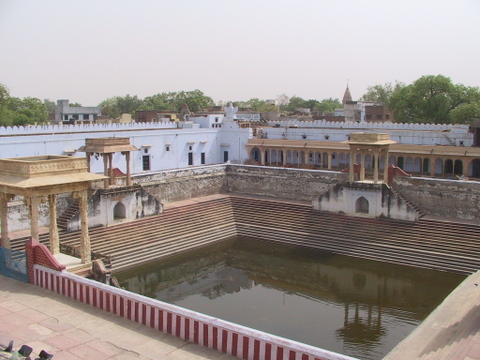
2) THE GREAT BATH  OF MOHENJO DARO 


THE GREAT BATH


Similar bathing tanks were also discovered in Dholavira.


Compare  with modern day Hindu temple ponds.


Ritual bathing(Sanskrit Snana) is very important for Hindus from the times of Harappan civilization.For example,Kumbh mela is a very sacred festival of Hindus


3) VEDIC SYMBOLISM

The seals and arts of Indus valley offers many Vedic symbolism such as Chakra,Sacred Pipal leaf,Swastikas etc...which are sacred for Hindus and Buddhists to this day.


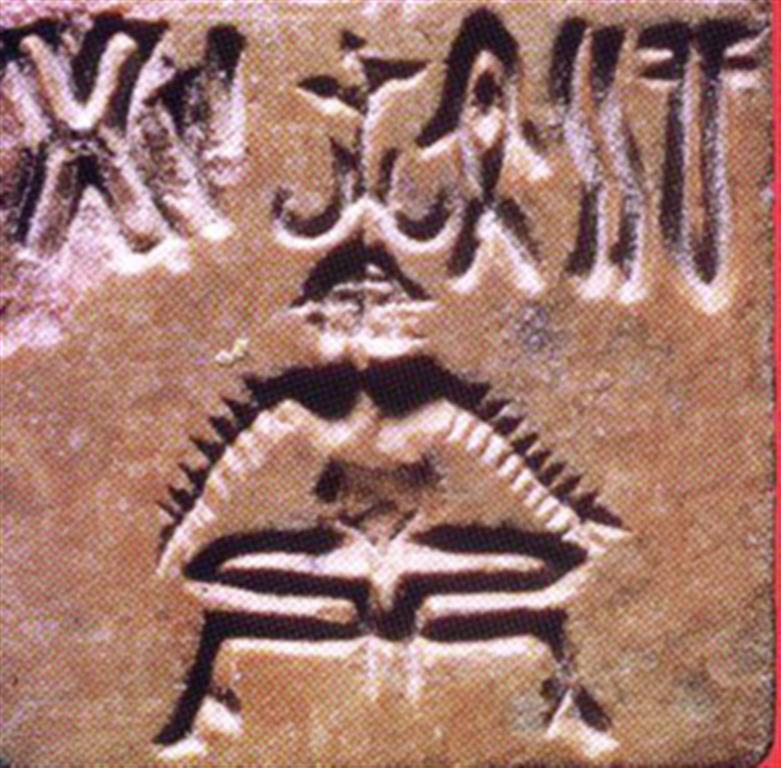
4) Yogic postures

Indus seals shows many Yogic postures which are practiced to this day.


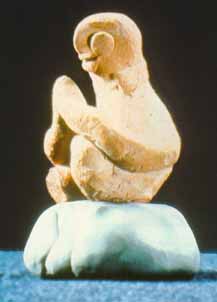
5) YOGIC MUDRAS


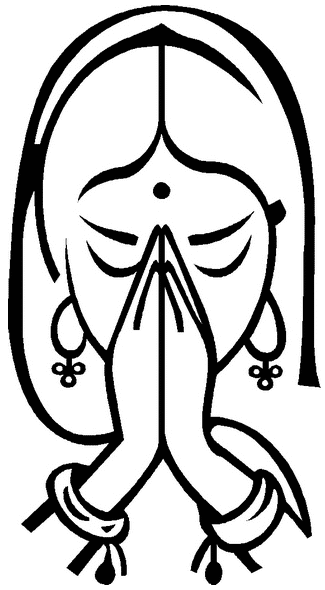
These figures in lotus postures from Harappan civilization shows "Anjali Mudra" or Namaste practiced by all major Indian(Dharmic) religions


6) Shiva Linga


This is a Shiva Linga from Kalibangan it is exactly the same as the one which Hindus use today.Many other Shiva Lingams were also found from Mohenjo-Daro.


7)Fertility Goddess cult


This is a fertility goddess figurine from Harappan  civilization, compare it with the figurines below.Notice the headdress and flowers,they represent the same goddess.


                                                                    Mauryan(400 BCE)
                                                                      
Gandharan (200 BCE)                                                                     


These figurines are from final 2500 YBP,which means this Goddess cult was active during Mauryan times and Gandharan times among Indo-Aryans.Mauryans and Gandharans were undoubtedly Indo-Aryans.This extinct cult must have been contemporary to the Hinduism Buddhism and Jainism at that times.It may be non-Vedic,but still it was practiced by Indo-Aryans.


8) Fire worship and fire altars.


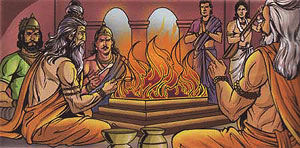
These fire altars are from Kalibangan and Lothal respectively.These fire altars are exactly similar to the Vedic fire altars used fro fire sacrifices or Yajnas,which are core of the Vedic faith.It is conducted by learned Brahmins.At Kalibangan row,of 7 fire altars were found at a citadel.Sites like Rakhigarhi,Banwali also have presence of fire worship.


.


AMT proponents are completely ignorant about these cultural similarities between Harappan civilization and Indo-Aryan culture.
Special thanks To Yajna...............................