Search This Blog

Thursday, 30 June 2016

The Center Cannot Hold: A Bioarchaeological Perspective on Environmental Crisis in the Second Millennium BCE , South Asia

 Gwen Robbins Schug and Kelly Elaine Blevins

INTRODUCTION
Crisis studies are currently on the rise because of angst over climate change and recent global warming; popular media capitalize on this increased interest by focusing on grand narratives of collapse and celebrating pre‐reflexive engagements with reality (e.g., Diamond, 2011). Legends of prehistoric collapse perpetuate myths about “human nature” in the face of crisis and they are particularly problematic when they do not account for the c omplexity of human experience or the contingent reality of decision making.  Archaeology—the discipline principally concerned with human diversity and environ-mental interactions in the past—is uniquely positioned to destabilize these myths and simplistic reconstructions of the past (e.g., McAnany and Yoffee, 2010). Human responses to crisis derive from particular historical, sociocultural circumstances; the concept of resil-ience is not actually distinct from the concept of collapse. This chapter considers the expe-rience of crisis and resilience in two different contexts in South Asian prehistory—the urban to post‐urban transition at Harappa and the rural, agrarian villages of the Jorwe phase of west central India (Map 3). This chapter is part of a long‐term project to examine human–environmental interactions in South Asian prehistory and to understand the long‐term  biocultural consequences of different short‐term strategies for coping with environmental and climate change.

Yog.

See also :
The Chronology of Puranic Kings and Rigvedic Rishis in Comparison with the Phases of the Sindhu–Sarasvati Civilization
Oxygen isotope in archaeological bioapatites from India: Implications to climate change and decline of Bronze Age Harappan civilization

Agriculture In India: Traversing Through Ancient Indian Literature

Dr. Ajesh TV
Agriculture is a system of life in which humans, plants and animals are interwoven. It has been playing a major role in the economy of India since the pre-Neolithic times. It was considered as an honourable profession and man took this as the principal means of livelihood. The earliest evidence as regards to agriculture comes from Mehrgarh (8000 BCE onward) in the North West and from sites in the Deccan, central India, Kashmir and the northwest [1]. ‘The process of domestication of plants and cereals would have taken a long time. Evidences of cereals can be traced at Mehrgarh and in the Vindhyas in 6,000 BCE. Wild varieties of rice have been found in the Vindhyan region in a Mesolithic context at Chopanimando in Meja Tehsil of Allahabad.’ [2] In later times, the excavations at Harappa and Mohenjo-Daro proved that there did exit a good system of agriculture [3]. The fabric of Indus agriculture rested undoubtedly on plough cultivation [4] The discovery of the furrows of a ‘ploughed field’ at Kalibangan and the plough explains the really large extend of Indus agriculture, covering the North-West plains and extending into Gujarat [5]. The granaries at Harappa and Mohenjo-Daro, the stack of storage jars at Kalibangan etc. suggest that the people were producing surplus [6] grains [7]. From the early historical period onward, texts and inscriptions in Sanskrit, Pāli, Prakrit and Tamil literature provide occasional descriptions of agricultural practices. Probably all castes and communities of Indian society, rich and poor, male and female were engaged in agricultural activities. They were commonly known as farmers and do not constitute a homogeneous group.
The Vedic literature gives plentiful evidence to agriculture. In Ṛgveda [8] there is abundance of data with regard to agriculture. Agriculture was the significant characteristic of the Ārya community and it was counted as a distinguishing mark of the ‘civilized’ from the ‘barbarians’. It was not confined to the lowest strata of population, but had been the occupation of a class of men who were held an important position in the society [9] According to Ṛgveda, cultivated fields are called kṣētra [10] and fertile ones urvara [11] which might indicate alluvial lands as well. Another term used in connection with agriculture is sītā. The term kṛṣṭi in Ṛgveda which denotes people in general, appear to imply that they were by and large agriculturists [12]. It refers to the preservation of seeds which indicates that agriculture was a regular occupation from year to year (5.53.13). ............

Yog.

Tuesday, 28 June 2016

New Indus Finds in Salut, Oman

 June 26th, 2016
Exciting new discoveries through 2015 at Salut tower in Oman show how extensive Indus trade and relationships with this area were during the Bronze Age (2500-2000 BCE). The article Bronze Age Salūt (ST1) and the Indus Civilization: recent discoveries and new insights on regional interaction by Denys Frenez, Michele Degli Esposti, Sophie Méry and Jonathan Mark Kenoyer describes and explains the finds in detail. These include include children's toys like a bird whistle, a seal made of chlorite, numerous pottery fragments of types common in places like Harappa, and much else that suggests that Indus traders were active and settled well inside the Omani coast. These recent excavations are led by the Italian Mission to Oman in collaboration with the Office of the Adviser to His Majesty the Sultan for Cultural Affairs.
"This evidence provides support for similar discoveries from excavations of towers and graves in Bāt, and suggests that the interaction between Indus communities and the Omani interior was much more extensive than previously thought," write the authors. Ancient Oman, during what is referred to as the Um al Nair period, is called "Magan" in ancient Mesopotamian texts, was known as a source of copper. The work described in the article below is yet another piece of evidence pointing to the extensive trade that must have once existed among the handful of sophisticated Bronze Age civilizations in the area, supporting wealth generation as well as a the flow of ideologies, beliefs and cultural practices.
Article: Bronze Age Salūt (ST1) and the Indus Civilization: recent discoveries and new insights on regional interactionWbesite: The Salut Museum/Universita di Pisa website


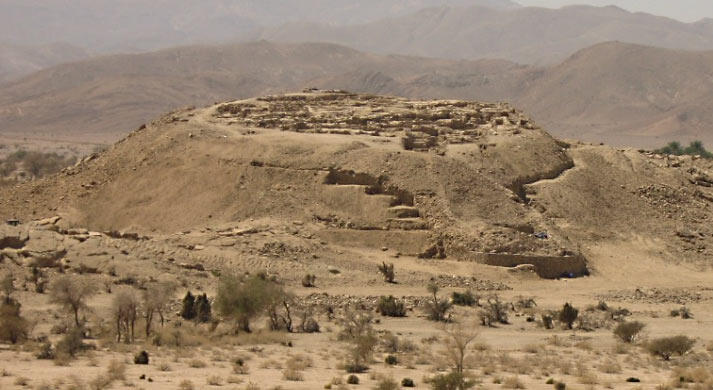
1. Salut archaeological site, Oman.
 
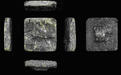
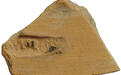
2. Seal impressed fragment, likely belonging to an Harappan ledge shouldered jar, the impression showing two confronting bulls and some Harappan script (l 3.6 cm, w. 5.5 cm, th. 0.7 cm).
 
3. This stone square stamp seal is probably the best example of an Indus-inspired seal found so far in Oman.
 
4. Among the luxury imported objects discovered in Ras al-Jinz, along the Omani coast, there is this beautiful comb made of elephant ivory. As well as pots, beads and a copper stamp seal, the comb comes from Harappa, one of the main sites of the Indus civilization.
 
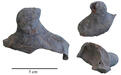
5. Fragment, from Salut, can be identified as a hollow clay “toy” in the shape of a bird: this kind of artifact is well known from Harappan sites (l. 8.5 cm, w. 7 cm, h. 5.5 cm).
Excavations

The researches are available here.

Thursday, 23 June 2016

Exploring Indus crop processing: combining phytolith and macrobotanical analyses to consider the organisation of agriculture in northwest India c. 3200–1500 BC


Jennifer Bates1 • Ravindra Nath Singh2 • Cameron A. Petrie1

Abstract

This paper presents a preliminary study combining
macrobotanical and phytolith analyses to explore
crop processing at archaeological sites in Haryana and
Rajasthan, northwest India. Current understanding of the
agricultural strategies in use by populations associated with
South Asia’s Indus Civilisation (3200–1900 BC) has been
derived from a small number of systematic macrobotanical
studies focusing on a small number of sites, with little use
of multi-proxy analysis. In this study both phytolith and
macrobotanical analyses are used to explore the organisation
of crop processing at five small Indus settlements with
a view to understanding the impact of urban development
and decline on village agriculture. The differing preservation
potential of the two proxies has allowed for greater
insights into the different stages of processing represented
at these sites: with macrobotanical remains allowing for
more species-level specific analysis, though due to poor
chaff presentation the early stages of processing were
missed; however these early stages of processing were
evident in the less highly resolved but better preserved
phytolith remains. The combined analyses suggests that
crop processing aims and organisation differed according 
to the season of cereal growth, contrary to current models
of Indus Civilisation labour organisation that suggest
change over time. The study shows that the agricultural
strategies of these frequently overlooked smaller sites
question the simplistic models that have traditionally been
assumed for the time period, and that both multi-proxy
analysis and rural settlements are deserving of further
exploration.
Keywords Indus Civilisation  Crop processing
Phytoliths  Plant macro-remains  South Asia  Bronze Age

Yog.

See also :
Oxygen isotope in archaeological bioapatites from India: Implications to climate change and decline of Bronze Age Harappan civilization
Friday, 27 May 2016

Buddhist Influence on Ka'ba

There are many theories regarding the original cultural background of Muhammad . Recently, I read this  post . Though, I don't support his ideas on Indian History, he makes some good posts in his website. But my aim in this post, is not to focus on Muhammad but on the Ka'ba , the holiest place in Islam. Now, coming to the point , I was reading the book Buddhism in Iran: An Anthropological Approach to Traces and Influences by Mostafa Vaziri. I have to say, that the book is a gem , it unearths many of the Buddhist traits hidden in the cultural sphere of Iran and neighboring nations!. But much to my surprise, in Chapter 6 of the book ,titled  Nawbaha¯r and Stu¯pa-
Like Islamic Shrines from p.94 to p.95, we read :


Various accounts also claim that the paintings on the walls of the Ka‘ba portraying the prophets included Abraham with the portrait of his son, Ismā‘il, facing him on a horse, as well as the portrait of Jesus with his mother Mary; apparently they were well preserved until the Ka‘ba was destroyed in a civil war. 27 Other celestial (or holy) characters were said to have been depicted in the Ka‘ba’s artwork. 28 It seems far-fetched that the pre-Islamic paintings of the Ka‘ba, a shrine whose patrons before the Prophet of Islam were neither Christian nor Jewish, would have contained paintings of biblical characters. The nature of these paintings may have been the remainder of pre-Islamic Hindu-Buddhist art work, if any. The task of giving Islamic identities to these un-tagged or “unknown” paintings and portraits in the Ka‘ba was presumably the work of the Muslim authors. It can be only speculated that the paintings were still preserved after the Ka‘ba was Islamized because the pictorial prohibition in Islam seemed to be imposed based on hadīth transmission only much later.
Further indication to the potential presence of the Buddhists in Arabia is that the thirteenth-century Rashīd al-Dīn Faḍlallāh, in his Jāmi’ al-Tawārīkh, asserts that in pre-Islamic times, the inhabitants of Mecca and Medina and certain Arabs and Persians were adherents of the Buddha Shakyamunī and that statues of the Buddha were kept in the Ka‘ba. 29 This assertion by Rashīd al-Dīn may possibly corroborate with a miniature of the thirteenth century showing the Prophet at Ka‘ba destroying two statues seemingly to be the seated Buddha in a meditational position and one statue of Hanuman (a Hindu deity with the head of a monkey). 30 Other characteristics of the pre-Islamic Arabs that Shahrastānī describes may further corroborate with the Indian beliefs. It is said that before the advent of Islam, the Arabs believed in reincarnation and had rejected the concepts of revelation and prophecy, 31 all of which also correspond with the Buddhist belief.
Moreover, Mas‘udī in his discussion of the Buddha (Budāsef) refers to the Buddha’s followers as communities of idol worshippers whose temples included the Ka‘ba ( bayt al-harām ). 32 He also describes the Quraysh tribe of Mecca as having two gold-plated deer statues, one to be placed at the entrance of the Ka‘ba andthe other to be kept inside. 33 During the flood in Mecca that destroyed the Ka‘ba, one of these golden deer went missing, and the Quraysh tribe therefore decided to remove the other deer. 34 The deer, as discussed in the previous chapter, is a typically Buddhist symbol. In a significant parallel, the statues of two golden deer on either side of the iconic Wheel of Dharma are placed at the entrance gates of Buddhist vihāras to this day.

How could Buddhism have reached Mecca? The sea journeys of Indians to
Yemen, Arabia, and Egypt are somewhat documented. In pre-Islamic times, Mecca was a tolerant polytheistic society as well as a trade center, lying near the Red Sea via the Spice Route and attracting traders and missionaries of different backgrounds via land and sea. The Meccan sanctuary was not only a place for an annual pilgrimage in pre-Islamic times, where no bloodshed was permitted, but was also a place wheremerchants from different lands, including India, would hold a common market fairfor the pilgrims. 35 According to another Islamic tradition, the Brahmans of India traveled to Mecca for worship and paying homage to the idols in pre-Islamic times. 36
Nāsir Khosrau of the eleventh century refers to seeing Indians of Yemen with their particular type of hair dress, beard, and cloth ( lungī ) wrapped around their waist come to Mecca. 37 We can only presume that these Indians who continued coming to Mecca for trade, interestingly, without prohibition may have been a mixture of Hindus and Buddhists, but in medieval times both communities were casually known as Hindus (referring to Indians). Other historical references do point to the link between India and Arabia. The Indian settlements in Arabia, Yemen, Babylonia, and Egypt during the peak of commercial trade are recognized in historical writings. 38 Indians are even believed to have settled in Mecca and Medina, explaining the presence of several Sanskrit words and names of Indian spices in the
Arabic language (e.g., ‘ambar ,mushk ,zenjabil, and kāfur ).39

Given these indications and assertions by certain chroniclers, we can only guess that the Ka‘ba may have possibly been another Buddhist vihāra before Islam. Consider the acts required of Muslim pilgrims on hajj even today that include, in contrast to the Buddhist, anticlockwise circumambulation ( tawāf ) of the Ka‘ba and prostration. In addition, hajj pilgrims are required to shave their head and wear monastic robes (sleeveless and unsewn clothes) and must forbear wearing closed-toe shoes, cutting branches of trees, killing prey, and having sexual intercourse. These injunctions strongly match the rituals of the Buddhist monastic tradition. 40 Yet in the Muslim tradition, these norms are described as temporary states of purity that are performed in the Ka‘ba by the pilgrims and are considered as a substitute for the purity of the Garden of Eden, and circumambulating is explained as being associated with Adam’s sin. 41 Despite these explanations on behalf of Islamic tradition, their similarity to Buddhist rituals is rather remarkable.However,it seems no historical memory remains of Buddhist connections with relation to Mecca.

I believe this was right under our nose . The Idea that Ka'ba is a Shiva Temple, is of course lunatic, propagated by Hindu Nationalist buffoons .But it seems, that there is,an indirect relation with Indic and Buddhist influences.We perhaps can also put the presence of Z-93 in Arabia into this context!.

Also Buddhist presence on the south coast of Arabia (Yemen, Socotra island), is not excluded, a friend of mine , met once a French archaeologist there, who told of ''ruins apparently of a Buddhist vihara with stupas in Yemen''. Also recently, there were Indian temples in Aden , also see here .We do know that, even  from the times of SSVC , there were robust trade relations with those parts of the world.

Goa: Dholavira site has first evidence of tsunami-protection wall in the world, say scientists

The discovery made by a group of Marine Archaeologist of NIO in February this year was based on a scientific probe and preliminary excavation 

Donapaula Published:May 25, 2016, 22:49
Scientific dating of ‘Fortified-walls’ around the Dholavira archaeology site in Kutch, Gujarat dates back to over 6000 years claim scientists from CSIR-National Institute of Oceanography. According to them, earlier misunderstood for reinforced forts to protect the port-town from enemy invasion, was in reality meant to protect the city from tsunami. The discovery, made by a group of Marine Archaeologist of NIO in February this year, was based on a scientific probe and preliminary excavation. Wall measuring thickness about 15-18 metres surrounded Dholavira, which the initial team of Archaeological Survey of India (ASI) led by R.S. Bisht concluded that the fortified structure was either protection wall or a reservoir, but it could be scientifically explained. 

DHOLAVIRA

“It was only recently when we tried to probe using Ground Penetrating Radar (GPR) and basic excavation that realised we discovered that it was far more broader for a enemy retaliation and did not show signs of reservoir,” Dr. Rajiv Nigam, Consultant and former Head of Marine Archaeology Unit said.

According to Nigam, study of Oceanography showed that Makkran coast that was close to Bhuj was a highly tsunami prone area and their research study indicated that the earliest recorded tsunami in the region was about 8000 years old. “So when the Dholavira was raised, the builders who had knowledge about the former catastrophe wanted to secured the walls from Tsunami and storm. The model of the wall is similar to that of 400 kilometre ‘sea-wall’ that Japan is said to have started last year, of course given the use of concrete material these days the width of the sea-wall, we have learnt is 12 metres, but the idea is the same. It means our ancestors were aware of Tsunami and succeeded in creating a defence to it,” he said. For the third-leg of the probe, the NIO team says it has already received the approval from the Archaeological Survey of India for further exploration at Dholavira. However the ambitious ‘discovery’ project has hit a dead-end due to impending financial impetus from Gujarat Council of Science and Technology. “It has been over nine-months since we sent the proposal to Gujarat Council of Science and Technology, but we have not received any update from them. It’s disappointing as we could have fastracked the discovery and probed if the ancient indigenous ‘Tsunami-wall’ was capable in deterring the catastrophe in modern times, since till date no reliable warning system has been found for the deadly ‘seismic sea wave’,” said the NIO team.