Search This Blog

Showing posts with label Books. Show all posts

Sunday, 11 January 2015

A critical approach to theories on ancient India

NATION FIRST — Essays in the Politics of Ancient Indian Studies: Dilip K. Chakrabarti; Aryan Book International, Pooja Apartments, 4-B, Ansari Road, Daryaganj, New Delhi-110002. Rs. 695.
T. SATYAMURTHY
History writing in India has become a sensitive initiative, carrying ideological leanings and authors’ personal views rather than integrating new findings into an ever-growing perspective. In fact, available archaeological evidence places Indian civilization as a manifestation different from how it is familiar in the rest of the world. Indian history so far available is squeezed into a western-centric framework through artificial and alien terminology: barbarism, feudalism, Aryanisation and class war.
It is in this background that Rabindranath Tagore affirmed that the present brand of Indian history is a nightmarish account of India. On reading it and looking at the archaeological material, one feels that historians are rather commanded by the comforts of conforming. The book under review analytically brings out recent trends in historical research and puts forth perspectives through a collection of seven articles by the author and eight reviews of books published on related subjects.
It begins with an introduction that there is no sense of national pride in the intellectual horizon of the Indian historians, who blindly follow the colonial version of Indian history. They projected Ancient India as virtual utopia, starting with the Vedic Age where the people were cattle-herders looking for good pastures, without familiarity with agriculture and grains like rice. Besides Vedic references on ploughmen and agriculture, many archaeological sites including Jhusi near Allahabad have yielded proof of rice cultivation in the region during the Neolithic phase, possibly as far as back as 9000 BCE., much earlier than the dates fixed by these historians for the Vedic period.
In the next phase, the author projects Indus Valley civilisation as the origin of many cultures of India. Archaeological sites have yielded many artefacts that evidence a cultural continuity with later Indian civilization. The discovery of ornaments, gaming materials, use of conch for libations as well as trumpeting, the ritual use of water for purification, important mode of worship such as the mother goddess and linga indicate the long connection between these cultures. In all respects the author tries to show that Indus civilisation is so characteristically Indian and all later cultures owe something to it. In fact, many of them reflect that there was no significant break or hiatus.
On the notion of Aryanisation of India on the basis of introduction of iron, the use of horses, and knowledge of spoked wheels, ample material is provided by him to shatter the theory. The beginning of the use of iron was previously dated to 1000-1200 BCE and attributed to the contribution and eastward migration of the imaginary Aryans. Now, recent archaeological excavations push back the use of iron to 1800 BCE (type site Malharin, U.P.). This fact corroborates the early use of iron in India and attests that India was indeed an independent centre for the development of the working of iron. According to Rakesh Tiwari, the present Director General, ASI, it overlaps the late Harappan stage, bridging the bronze-iron ages.
Among the faunal remains of the Mature Indus civilisation levels of Harappa, Lothal, Surkotada and Kalibangan horse bones have been identified by a number of scholars and attested by the Zoological Survey of India. Equally revealing discovery is the presence of spoked wheels in the mature Indus civilisation levels in Rakhigardi and Banawali (Haryana). The Aryan myth was introduced to demonstrate that the present cultural assemblage of India is not an inherent product of Indian soil, but brought by Indo-Aryans. Such scholars/historians are unaware of the socio-political implication of the premise as it divided the population into two major groups Aryans and Dravidians. On another issue raised by J.M. Kenoyer and Kimbly Heuston over the human occupation of the Yamuna-Ganga river valley by Aryans only during 2000BCE, he points out the earliest level of Alamgirpur as datable to the middle of third millennium BCE and hence rules out settlement by new communities.
Focussing on India’s cultural unity, the author takes up the distribution of Northern Black Polished Pottery (NBP), a distinctive Ganga plain pottery of 800 BCE, as an important chronological marker and calibrates the date of Korkkai and Alankulam in Tamil Nadu around 500 BCE almost contemporary with that in Ganga plain. He corroborates this date with the sherds with Tamil - Brahmi unearthed in Porunthal near Palani and accepts the early date for Tamil-Brahmi. In fact, this can be considered as the turning point in accepting early date for Tamil-Brahmi script.
One clear unity that India possessed throughout history has been geographical and with the help of pottery, he traces various ancient Indian dense routes giving material expression to the inter-connection between different areas and the growth of a shared culture.
Reviewing Dr. Upender Singh’s book Rethinking Early Medieval India — A Reader, he refutes the theory of ancient Indian governance as a feudal set-up on the grounds of increased number of land grant inscriptions to the privileged select few. Numerically such inscriptions constitute only a very small percentage and other archaeological evidence of material remains of life on agriculture, settlements, technology, art and trade of the period bring out a different scenario.
Evaluating the present trend in the functioning of various institutions under the Union Department of Culture, the CAG’s report is analysed critically; and, on the functioning of the ASI, the author laments the non-publication of many archaeological excavation reports and points out that Indian archaeology lacks scientific support for academic interpretations. Nevertheless, the author is silent on the fact that ASI was headed by non-technical bureaucrats for more than a decade.
One central focus throughout the volume is the role of Indian archaeologists hankering after so-called international recognition and accepting their lesser role without demur and unfailing in their praise of the work done by their Euro-American colleagues. Their devotion to the western world’s recognition paves the way for an unholy conglomeration of various interest groups to exploit Indian archaeological materials for misinterpretations. On the same grounds the Pattinam excavation in Kerala was hijacked by the western world while Indian archaeologists were mere spectators. He concludes that the Government of India should resort to remedial measures.
Besides its critical approach, the volume provides updated archaeological material on climate in Indus valley, on the trail of Sarasvati, the lost river, urbanisation in the Ancient Indus Valley, decline of Buddhism in India, the status of State religion in Ancient India, all of which would be useful for research scholars in Archaeology and History. In fine it is a welcome addition.

Sunday, 27 October 2013

The Vedic Harappans, The Disaster of  Michael Witzel  and Some Flowing Traditions.....

On Aryans and Colonial Archaeology
Vedic Harappans
by Bhagwan Singh, Aditya Prakashan, F-14/65, Model Town II, New Delhi,1995
Jaspal Singh
South Asian History has been greatly distorted by the tendentious, colonial and eurocentric rendition of the development of the region. One of the most distorted areas of history has been the question of Aryans and the Indus Valley civilisation.
In this new work, Bhagwan Singh presents an important thesis on the origins of civilisation in South Asia. In the process, he also takes a hard look at the vast body of literature on the subject on this subject that has come down from colonialist scholars and their latter-day descendants.
Bhagwan Singh discusses the "Aryan" problem and settles this long-running debate with convincing arguments. As the title Vedic Harappans, itself suggests, Bhagwan Singh is not treading the old path. For him, the Vedic literature describes the Harappan reality. These are not two different or opposing tendencies. He states,
In short, if we discount the colonial legacy of docile self-denials and falling quickly in line with alien expectations, archaeology was at no stage at variance with the Aryan character of the Harappan civilization.
On the question of the Aryan invasion, he discusses in detail all the arguments put forward by the proponents of this theory. In a chapter titled The Myth Of Aryan Invasion, he points out that "there is neither any literary account of invasion of India by Aryans nor any archaelogical evidence to support such a hypothesis".
He forcefully argues this case: "As we have seen, the Vedic people did not come from outside. The Harappan cities, the first flowering of Indian civilisation, did not fall because of their invasion".
Bhagwan Singh argues with evidence:
Aryans were born with ar/al, the digging stick or hoe in their hands. It was neither their colour, nor their blood nor yet the size and sharpness of their nose which made them proud of themselves. They were proud of their being Aryans or cultivators at a time when the tribes surrounding them were at the stage of hunting and gathering.
It was the Aryans who discovered agriculture and initiated the agrarian revolution and a new mode of production. Earlier the Aryans were called Devas. The term derives from ti/di, meaning burn or shine, and refers to their control over fire. 
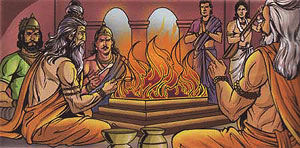
It was the discovery of fire including the technique of producing, maintaining and controlling it that revolutionised their thinking and prompted them to undertake new ventures.
He concludes that :
The Aryans were primarily agriculturists. They derived their name from this advancement at a time when people around them were lingering at the lower stage of gathering and hunting. Some of them formed their own kindered communities, refused to move ahead and censured them for their madness for ruining the natural sources which provided them liberally.
Later on these Aryans developed into great traders and travelled all over the known world of the time, taking their agriculture, trade, language and customs with them. 
Bhagwan Singh also examines the hypothesis of Proto Indo-European language in a chapter titled The Language The Harappans Spoke. He states:
Proto-Indo-European is not a fact but an idea floated in order to displace Sanskrit from the centre of discussion. it the product of a magical realism created for projecting the white man's racial superiority back into the hoary past.
He concurs with the view that Sanskrit is a refinement of different Prakrits which were spoken at the time in India. And that out of these Prakrits, natural languages, a refined and classical language-Sanskrit emerged. "It is admitted (Harmatta 1992) that Sanskrit and Vedic languages are refinements of the Prakrit languages." Bhagwan Singh has dealt with matter at length in his Hindi book, Arya Dravid Bhashyaon Ki Moolbhoot Eikta.
Vedic Harappans is a "must read" book for South Asians in general and those who are seriously interested in History of the region in particular. Bhagwan Singh has put to rest a lot of myths about the history of South Asia and deserves praise for this heroic effort.
yog

Bhagwan Singh versus Michael Witzel!


Michael Witzel: rattled rat at IIC
Bhagwan Singh
22 July 2009
I was really sorry for Prof. Michael Witzel. After all, he was our honoured guest! Dr. Singh should not have pounced on him so mercilessly, playing the cat and the rat game – the cat looking ascetically resigned tossing the rat, the rat pretending to be dead, breathlessly looking from the corner of his eye to judge the cat’s next move, running for his life, only to be pounced upon and tossed up again. The Chair kept smiling all through at this plight of the powerful brainy Harvard Professor of Sanskrit!
Frankly, I enjoyed the wild play. Prof. Witzel was in a state of trauma: nervous, edgy, twitching his lips, dropping his eyelids recurrently, looking askance to avoid his interlocutor, constantly using his hanky to rub his nose, murmuring something inaudible to explain his errors, occasionally seeking help from his votaries who were present in good number, but more ignorant than their demi-god, and hence themselves dazed. Singh smiled all the way, his smile mischievous, eyes sadistically aglitter, untrue to his true nature, but true to the occasion.
Rgveda
The occasion was a lecture on the Rgveda by Prof. Michael Witzel, at the India International Centre, on 10 July 2009. Presided over by Dr. Kapila Vatsyayan, it was attended by scholars of different hues and expectations. No one suspected that Witzel with his claim to be a ranking Vedic scholar knew so little that he could not answer a single query. Indeed, he appeared blank as far as the Rgvedawas concerned. He rose nervously to speak on the Veda, but actually spoke on the Aryan migration from Afghanistan to Punjab !
The lecture merely reiterated what Prof. Witzel has written years ago: that north-western India was populated by Munda speaking people when Indo-Aryan speakers arrived on the scene. Old Indo-Aryan was influenced by the substrate Proto-Munda. He proposed a time bracket of 1500-1250 BC for composition of the Rgveda and suggested Book IV and Book VI were the oldest, advantage Book IV.
Witzel painted Rgvedic society as nomadic pastoralist, illiterate and with little interest in agriculture and sedentary life. There was virtually nothing in his speech that was not lifted from nineteenth century archives. He showed no awareness of recent researches in archaeology, anthropology, literature or historical linguistics, and presented even Kuiper with his pathological distortions.
Many archaeologists and professors of history attended the lecture, including your writer, Vedic scholar Bhagwan Singh. When the floor was thrown open for discussions, Bhagwan Singh introduced himself as the author of The Vedic Harappans, and said that his data contradicted each and every statement made by Witzel; he sought permission to exchange notes on a few issues. With the Chair’s permission, Singh said:
- You have reordered the Rgvedic strata, rating IV and VI to be the oldest and the rest belonging to intermediate and late stages. I have no objection to your sequence, but find your chronology miserably on the lower side. There is a reference to white pottery in one verse in Book IV (4.27.5). White pottery is a distinctive feature of Hakra Ware dated to 3000 BC. This goes against your dating of 1500-1250 BC for the Rgveda.
Witzel was dumbstruck. He murmured something inaudible, avoiding the audience, looking sideways. He tried to explain that the sequence arranged by him was based on the number of verses in a book, the smallest being the oldest. It caused Kapila ji and others to smile openly. I could not make out the reason and reminded him that Book IV is shorter than Book VI; but the shortest book is Book II! So here again, he was caught on the wrong foot.
He hesitantly managed, “There is no evidence of chariot or horse in India earlier than the mid-second millennium.”
-         But Professor, the aśva in Rgveda, whatever could it have been, was brought from sea bound areas, even the aśva in the horse sacrifice, mentioned in Book I, hymn 163.
Prof. Witzel had no choice but to bite his lips in desperation.
-         You say that the wheel and chariot were invented by Aryans when they were in Central Asia , but in the Book IV itself, Bhr.gus are given the credit for manufacturing wheels (4.16.20). Chariot and wheel was therefore not Aryan, but a Dravidian invention.
Witzel pretended that the inventors might have been Aryans and manufacturers Dravidians! He now forgot the antiquity of Book IV, which according to his suggestion, could have been written in Central Asia, older even than Book VI, composed entirely in Northern Afghanistan ; Dravidian speakers must have been there as well.
-         You talk of substrate effect of Proto-Munda and suggest no role of Proto-Dravidian at the early stage. But Kipper had concluded that three ethnic groups participated in a cultural process. The three are conspicuously present in the Rgveda, Bhr.gus Dravidian, Angirasas Mundari, besides the Sanskrit speakers.(Note 1)
Prof. Witzel mumbled something for a minute; his nervousness was apparent in his evasive gestures.
Kapila ji must have taken pity at his visible discomfort. She invited others to raise doubts, if they had any. Someone at the extreme end of the hall asked a question on the distorted reading of the Sankhyayan Śrautasutra, which had exposed his culpability half a decade back. Witzel responded by referring to an article written by him, without telling us what his defence was!
After a few worthless queries, the debate shrunk back to Michael Witzel, Kapila Vatsyayan, and Bhagwan Singh.
-         The problem with you, Professor, is that you are not familiar with the content of Book IV even. Hymn 57 of Book IV gives a graphic depiction of advanced agriculture, with a plough almost similar to the one that was common in India up to the mid-twentieth century, drawn by a pair of bullocks and driven by a ploughman in service. And in one of the Ŗics, the poet talks of milking the earth as a cow, year after year. It testifies to advanced agricultural activities with sedentary population and belies the myth of nomadism, pastoralism, and barbarity.
The Chair could not hold her laughter; Witzel shook in dismay.
The last nail was hammered by Kapila ji herself. In a jocular vein, she said, “The theme of the lecture was Rgveda. Vedic poetry is known for its sublimity and rare beauty. I expected Prof. Witzel to speak something on it, but he did not say even a word on the theme.”
Witzel agreed that the Hymns on Uşā are really beautiful.
I interjected, “not only Uşā Sūktas professor, the entire Rgveda.Some of it could never be surpassed, such as the Nāsdīya Sūkta, with such expression as tama āsīt tamasā gūlhmagre, darkness was entrapped within darkness.
All in all, it was an interesting evening, if not for the presentation by Prof. Witzel, then for his discomfiture.
Prof. Bhagwan Singh is a Marxist scholar who accepted the archaeological evidence against the theory of Aryan invasion of India
yog
Note 1: There Is No Substratum In Vedic and i'm working on the issue and soon will dismiss it.....

The Traditions Still Flowing.......

1) BANGLE TRADITION


DANCING GIRL OF MOHENJO-DARO


HEADLESS FIGURINE FROM INDUS VALLEY


Compare these statues with modern day gypsy women of north-western India.Notice the similarities between bangles on their hands.


These women are Indo-Aryans,they speak Indo-Aryan languages and they have Indo-Aryan gypsy culture.This bangle tradition lives on from the times of Harappan civilization to this day.


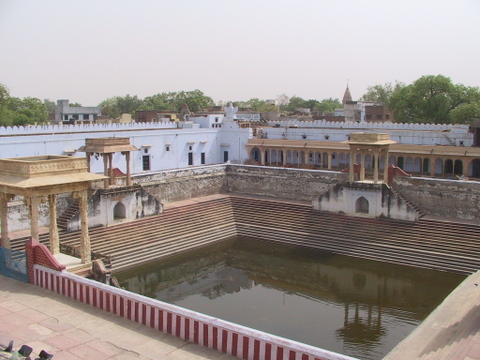
2) THE GREAT BATH  OF MOHENJO DARO 


THE GREAT BATH


Similar bathing tanks were also discovered in Dholavira.


Compare  with modern day Hindu temple ponds.


Ritual bathing(Sanskrit Snana) is very important for Hindus from the times of Harappan civilization.For example,Kumbh mela is a very sacred festival of Hindus


3) VEDIC SYMBOLISM

The seals and arts of Indus valley offers many Vedic symbolism such as Chakra,Sacred Pipal leaf,Swastikas etc...which are sacred for Hindus and Buddhists to this day.


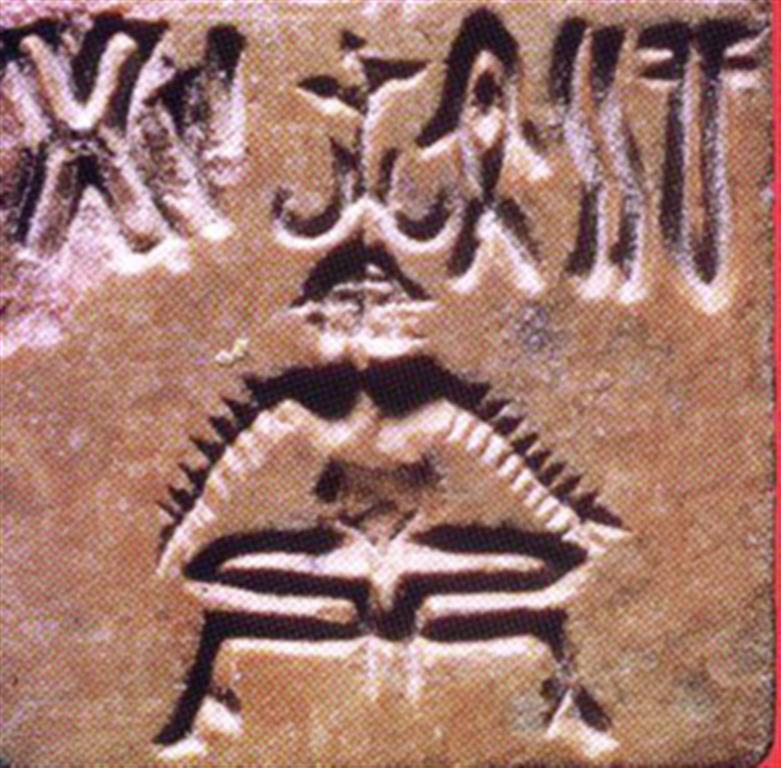
4) Yogic postures

Indus seals shows many Yogic postures which are practiced to this day.


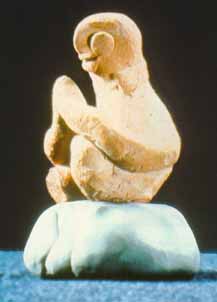
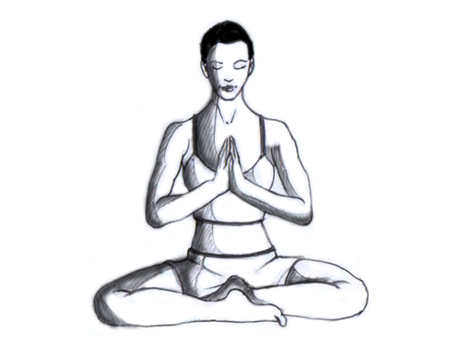
5) YOGIC MUDRAS


These figures in lotus postures from Harappan civilization shows "Anjali Mudra" or Namaste practiced by all major Indian(Dharmic) religions


6) Shiva Linga


This is a Shiva Linga from Kalibangan it is exactly the same as the one which Hindus use today.Many other Shiva Lingams were also found from Mohenjo-Daro.


7)Fertility Goddess cult


This is a fertility goddess figurine from Harappan  civilization, compare it with the figurines below.Notice the headdress and flowers,they represent the same goddess.


                                                                    Mauryan(400 BCE)
                                                                      
Gandharan (200 BCE)                                                                     


These figurines are from final 2500 YBP,which means this Goddess cult was active during Mauryan times and Gandharan times among Indo-Aryans.Mauryans and Gandharans were undoubtedly Indo-Aryans.This extinct cult must have been contemporary to the Hinduism Buddhism and Jainism at that times.It may be non-Vedic,but still it was practiced by Indo-Aryans.


8) Fire worship and fire altars.


These fire altars are from Kalibangan and Lothal respectively.These fire altars are exactly similar to the Vedic fire altars used fro fire sacrifices or Yajnas,which are core of the Vedic faith.It is conducted by learned Brahmins.At Kalibangan row,of 7 fire altars were found at a citadel.Sites like Rakhigarhi,Banwali also have presence of fire worship.


.


AMT proponents are completely ignorant about these cultural similarities between Harappan civilization and Indo-Aryan culture.
Special thanks To Yajna...............................